
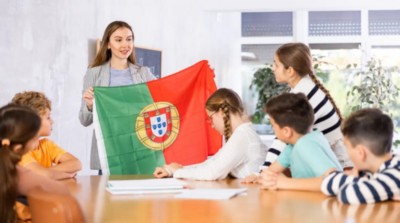
Portugal moves to regulate AI use in schools, sets out guidelines for responsible classroom learning
Lisbon: Portugal is preparing to introduce a comprehensive framework to regulate the use of artificial intelligence (AI) in schools, seeking to strike a balance between embracing emerging technologies and safeguarding the quality, integrity and independence of education.
The guidelines, developed by the Institute for Education, Quality and Assessment (EduQA) this week, are designed to provide schools, teachers and students with a clear understanding of how AI can be incorporated into teaching and learning without undermining fundamental educational values. The final version is scheduled for distribution on January 4, 2027, following a public consultation process and an assessment of feedback from education stakeholders.
The draft framework, which underwent a 30-day public consultation beginning October 15, 2026, applies to both public and private educational institutions, covering the entire school system from pre-school to primary and secondary education.
At the heart of Portugal’s proposed policy is the recognition that artificial intelligence can offer considerable opportunities for education, but its use must be guided by clear principles, age-appropriate safeguards and responsible supervision. Rather than imposing a blanket prohibition or allowing unrestricted access, the guidelines seek to establish a structured approach that enables schools to benefit from technological advances while preserving students’ ability to think, learn and work independently.
A distinctive feature of the proposed framework is its classification of classroom activities into three categories, reflecting different levels of permitted AI involvement.
The first category, described as “No AI”, covers activities in which students are expected to demonstrate their knowledge, understanding and abilities independently, without relying on artificial intelligence. This approach is intended to ensure that teachers can accurately assess individual performance and determine whether students have genuinely acquired the required skills.
The second category, termed “Supporting AI”, allows students to use AI tools for specific purposes with the explicit authorisation of their teachers. Under this arrangement, artificial intelligence may assist with particular aspects of an assignment or learning exercise, but its role remains limited and subject to educational objectives and teacher supervision.
The third category, known as “Integrated AI”, envisages situations in which artificial intelligence becomes an integral part of the classroom activity or forms part of the intended learning outcomes. In such cases, students may be expected not only to use AI tools but also to understand how they work, assess their output and recognise their limitations.
This three-tier approach is intended to give teachers greater flexibility in determining when and how AI should be used, while establishing transparent expectations for students. It also acknowledges that different subjects, assignments and stages of education may require different levels of technological involvement.
Portugal’s proposed guidelines place particular emphasis on the age and developmental needs of children. At pre-school level, artificial intelligence is primarily envisaged as a resource for educators rather than a technology to be used directly by young children. Its potential role would be to support teachers in preparing activities and improving educational practices, while ensuring that early childhood learning continues to prioritise human interaction and age-appropriate development.
For older students, the emphasis shifts towards developing critical awareness and the ability to engage responsibly with AI-generated material. Students would be encouraged to identify inaccuracies and fabricated information produced by AI systems, independently verify facts and sources, and understand that technological outputs are not necessarily reliable or authoritative.
The framework also seeks to reinforce the importance of academic honesty at a time when AI tools are making it increasingly easy to generate written assignments, images and other educational content. By clearly defining the circumstances in which AI assistance is permitted, schools would be better positioned to distinguish between legitimate technological support and the inappropriate substitution of a student’s own work.
Data protection and digital security constitute another important pillar of the proposed policy. Schools and students are advised against entering personal information, academic grades, photographs or other sensitive material into AI platforms that have not been approved for educational use.
The guidelines further identify the creation of fabricated images, videos and audio material as a potential security incident, reflecting growing concerns about the misuse of generative AI and the risks associated with manipulated digital content. The approach is intended to promote awareness of online safety, protect the privacy of students and teachers, and prevent the unauthorised use of personal information.
To facilitate implementation, the Portuguese authorities have also developed five practical resources to help educational institutions translate the proposed principles into everyday classroom practices.
These include a traffic-light system designed to help teachers and students assess whether particular uses of AI are appropriate, as well as a checklist for students to evaluate their use of artificial intelligence. The resources are intended to make the guidelines accessible and practical, allowing schools to establish consistent expectations without unnecessarily restricting teachers’ professional judgement.
Feedback received during the public consultation, alongside an opinion requested from the Organisation for Economic Co-operation and Development (OECD), will contribute to the preparation of the final document.
A broader lesson for education systems
Portugal’s initiative comes at a time when artificial intelligence is rapidly transforming the global education landscape, presenting schools with both significant opportunities and difficult questions about academic standards, the role of teachers and the future of learning.
As AI-powered applications become increasingly accessible, educational institutions face the challenge of ensuring that students benefit from technological assistance without becoming overly dependent on automated systems. The ability to distinguish reliable information from fabricated content, question machine-generated answers and exercise independent judgement is becoming as important as acquiring traditional academic knowledge.
Portugal’s proposed framework offers an interesting model by moving beyond the conventional debate over whether AI should be allowed in classrooms. Instead, it seeks to establish when, why and under what conditions the technology can be used.
Its emphasis on teachers’ pedagogical autonomy is particularly significant. Rather than placing all classroom activities under a uniform set of restrictions, the guidelines allow educators to determine the appropriate level of AI involvement according to the subject, age group and learning objectives. At the same time, the three-category system provides students with greater clarity about what is expected of them and where the boundaries of acceptable technological assistance lie.
The initiative also draws attention to wider issues of educational equality, privacy and responsible digital citizenship. As access to AI tools expands, schools must ensure that technological adoption does not deepen existing inequalities or expose children to unnecessary data and security risks.
Ultimately, Portugal’s approach reflects an emerging understanding that the future of education will not simply be about introducing more technology into classrooms. It will depend on preparing students to use that technology intelligently, ethically and critically, while retaining the human judgement, creativity and independent thinking that remain central to meaningful education.