
Italy clinches EU deal to shield households and businesses from soaring energy costs
Newswire
Rome: Italy has reached an agreement with the European Union on measures aimed at limiting the impact of soaring natural gas prices on electricity costs for households and businesses, marking a step forward in the government’s efforts to ease the energy burden on consumers and protect industrial competitiveness.
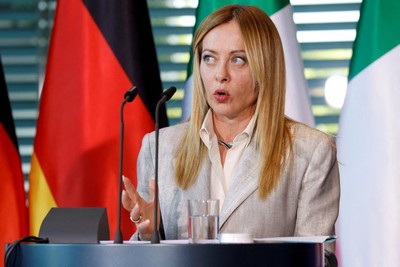
The agreement, announced by the office of Prime Minister Giorgia Meloni, establishes a framework for Italy to introduce temporary measures in line with EU state-aid rules while seeking to reduce the pressure of rising gas prices on electricity bills.
The Italian government said the arrangement followed intensive and constructive discussions with the European Commission, with both sides seeking to mitigate energy costs without undermining fair competition within the EU’s internal market.
Under the agreement, Italy will formally notify the European Commission of its proposed temporary measures, which the Commission will assess as a matter of priority.
Meloni’s office said the arrangements were designed to preserve a level playing field among businesses operating across the bloc and minimise potential market distortions.
However, the government’s initial announcement did not disclose the detailed terms of the agreement or specify the precise savings households and businesses could expect.
The deal comes as Italy faces mounting pressure to contain energy costs that have weighed on household budgets and increased operating expenses for businesses, particularly energy-intensive industries.
Natural gas plays a significant role in Italy’s electricity generation, making power prices particularly sensitive to fluctuations in gas markets. When gas prices rise, the increase can feed through into wholesale electricity prices, affecting consumers and manufacturers alike.
The government has therefore sought greater flexibility to address the relationship between gas prices and electricity costs, arguing that high energy bills threaten household purchasing power and the competitiveness of Italian industry.
For Rome, the agreement with Brussels represents an effort to reconcile its domestic energy-relief objectives with the EU’s regulatory framework, which governs government assistance to businesses to prevent unfair advantages and distortions in competition.
The European Commission’s assessment will be an important next step in determining how the proposed measures can be implemented.
The agreement also highlights the wider challenge facing European governments as they seek to protect consumers from energy-price volatility while maintaining a common market in which companies compete under broadly equal conditions.
For households, the potential benefit lies in limiting the extent to which rising gas prices translate into higher electricity bills. Businesses could also benefit from measures designed to ease energy-related costs, although the scale and timing of any relief remain unclear.
Italy’s announcement signals progress in negotiations with the EU, but the practical impact will depend on the final measures notified to the Commission and the subsequent assessment under the bloc’s state-aid rules.
The government has pledged to pursue temporary intervention while preserving competition in the internal market, leaving the detailed implementation of the agreement as the next stage in its effort to address the country’s energy-cost pressures.