
UK, Pakistan explore avenues for stronger textile sector cooperation
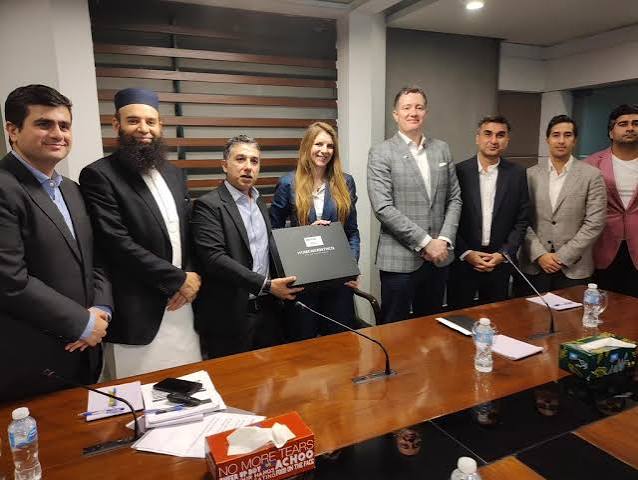
Lahore: British High Commissioner to Pakistan Jane Marriott CMG OBE visited the All Pakistan Textile Mills Association (APTMA) House on Saturday, accompanied by Ben Warrington, Head of the Lahore Office at the British High Commission, and Reema Salman, Outreach Lead at the British High Commission Lahore, for an interactive session with APTMA leadership and senior members on key issues facing the textile industry and opportunities for enhanced cooperation with British stakeholders.
The meeting focused on identifying practical avenues for strengthening bilateral commercial, institutional and technical collaboration, particularly across Pakistan’s textile and apparel value chain. Discussions also covered market access, sustainability, compliance with international conventions, innovation, research and the development of stronger business linkages between Pakistan and the United Kingdom.
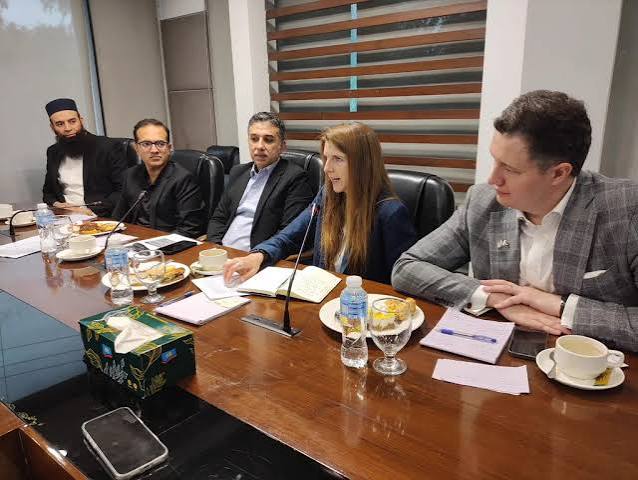
The visiting delegation was warmly received by APTMA office-bearers, including Chairman Asad Shafi, Vice Chairman Muhammad Anees Khawaja, Chairman North Muhammad Siddique Bhatti, Senior Vice Chairman North Habib Anwar Sheikh, Vice Chairman North Muhammad Ali, Treasurer North Danish Aslam and other senior members of the association.
During the interaction, the British High Commissioner appreciated the diversity and capabilities of Pakistan’s textile industry, particularly its efforts to address sustainability requirements and comply with international conventions. She encouraged the business community, especially exporters, to take timely and effective measures to ensure compliance with applicable international standards and conventions, helping the industry maintain its competitiveness and secure greater access to international markets.
Jane Marriott also emphasized the importance of Pakistani businesses participating actively in trade fairs and exhibitions in the United Kingdom. She said such platforms could provide exporters with direct access to British buyers and consumers, enabling them to showcase their products, establish commercial contacts and explore new business opportunities.
Highlighting the potential for expanding bilateral trade, the High Commissioner stressed the need to explore improved market access and establish stronger connections with British high-street brands and retailers. She noted that closer engagement between businesses in the two countries could support commercially viable partnerships throughout the textile and apparel value chain.
She further underscored the importance of collaboration in innovation, research and development, particularly in technical and specialized textiles, where British expertise and institutional capabilities could help Pakistani manufacturers develop higher-value products and strengthen their competitive position.
The High Commissioner also encouraged APTMA members to identify suitable British consultants and sector specialists who could provide technical assistance and professional guidance in areas of mutual interest. Such cooperation, she noted, could help address industry-specific challenges while promoting knowledge-sharing and the adoption of improved production practices.
Speaking on the occasion, APTMA Chairman Asad Shafi described the textile and apparel sector as a key platform for strengthening the longstanding and mutually beneficial relationship between Pakistan and the United Kingdom.
He said the two countries enjoyed historic ties and that significant potential remained to expand bilateral trade, investment and institutional cooperation. Greater engagement with British stakeholders, he added, could help improve competitiveness, promote sustainable manufacturing, encourage innovation and broaden international market access across Pakistan’s textile industry.
Asad Shafi highlighted the potential benefits of collaboration with British textile laboratories, testing facilities, universities and research centres. He said such partnerships could contribute to product development, quality assurance, sustainability initiatives, technological innovation and technical capacity-building, enabling Pakistani manufacturers to respond more effectively to evolving international market requirements.
He stressed the need to develop a practical framework for cooperation among APTMA, the British High Commission and relevant UK institutions to translate shared priorities into tangible initiatives. The framework, he said, should cover all major segments of the textile and apparel value chain, including spinning, weaving, processing, garments, home textiles and export-oriented manufacturing.
The APTMA chairman expressed hope that stronger links with British brands, retailers, consultants, technical institutions and investors would open up new commercial opportunities for Pakistani businesses. He said deeper cooperation could also support responsible and sustainable growth, strengthen industrial capabilities and enhance the sector’s contribution to Pakistan’s exports.
Speaking on the occasion, APTMA Chairman North Muhammad Siddique Bhatti said the interaction had provided association members with a valuable opportunity to present the industry’s priorities and identify areas where British expertise and institutional support could make a meaningful contribution.
He observed that cooperation with British stakeholders could help enhance productivity, encourage innovation, strengthen skills development and improve Pakistani textile exporters’ access to the UK market. He emphasized that sustained engagement and practical collaboration would be essential to addressing emerging challenges and capitalizing on new opportunities in the global textile trade.
Siddique Bhatti reaffirmed APTMA’s commitment to constructive engagement with the British High Commission and relevant stakeholders to establish durable partnerships that benefit the entire textile value chain and contribute to stronger economic cooperation between Pakistan and the United Kingdom.
The meeting underscored the potential for closer collaboration between the two countries in trade, investment, technical expertise, research and sustainable manufacturing, with both sides highlighting the importance of translating dialogue into practical initiatives that support the long-term development and international competitiveness of Pakistan’s textile and apparel industry.