
From dinosaurs to the Golden Man, Kazakhstan museum tells the story of the Great Steppe
Astana:: A journey through Kazakhstan’s National Museum is, in many ways, a journey through time — from prehistoric creatures that once inhabited the vast Kazakh steppe to ancient nomadic civilizations, the rise of Turkic states, the Silk Road, the Kazakh Khanate and the country’s transformation through the modern era.
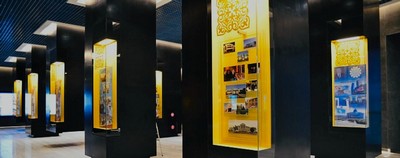
Located in the heart of Astana, the National Museum of the Republic of Kazakhstan brings together an extraordinary range of archaeological, historical, ethnographic, paleontological and artistic treasures, offering visitors a window into the forces that have shaped the identity of the country and the wider Great Steppe.
Rather than presenting history as a series of isolated periods, the museum’s extensive collections reveal the continuity of life and civilization across the territory of present-day Kazakhstan.
Established in 2013 under the state Cultural Heritage programme and opened to visitors on July 2, 2014, the museum has grown into one of the largest and most modern museum complexes in Central Asia.
The vast complex covers 74,000 square metres and contains 20 permanent and temporary exhibition halls, with more than 14,000 square metres of exhibition space.
Its galleries take visitors through different chapters of Kazakhstan’s past, beginning with the natural history of the region and moving through prehistoric settlements, ancient cultures, medieval states, traditional Kazakh society and the artistic and political development of the modern country.
A land shaped over millions of years
The story begins long before the emergence of human civilization.
The museum’s paleontological collection presents evidence of ancient life found across more than 600 sites throughout Kazakhstan. Fossils of marine organisms from the Paleozoic era, Jurassic remains from the Karatau region, ammonites and ancient shark teeth illustrate the dramatic geological changes that shaped the territory.
The remains of mammoths, rhinoceroses and ancient horses provide another glimpse into the prehistoric world, while life-size dinosaur reconstructions bring Kazakhstan’s distant natural history vividly to life.
From there, the museum moves into the human story, with its archaeological collection tracing thousands of years of settlement and cultural development.
Artefacts from the Paleolithic, Mesolithic, Neolithic and Eneolithic periods demonstrate the gradual development of human societies, while materials associated with the Botai culture provide an important window into early communities of the Eurasian steppe.
Bronze Age ceramics and weapons, along with artefacts associated with the Saka civilization, reveal increasingly sophisticated societies that developed distinctive technologies, artistic traditions and systems of social organization.
The Golden Man and the art of the steppe
Among the museum’s most visually striking displays is the “Gold” Collection, which reflects the extraordinary craftsmanship of the ancient peoples of the Great Steppe.
The collection is dominated by the image of the Golden Man, discovered in the Issyk Kurgan and now regarded as one of Kazakhstan’s most recognizable cultural symbols.
The discovery of thousands of gold ornaments associated with the burial demonstrated the remarkable metallurgical and artistic skills of ancient steppe societies.
The museum also displays gold objects, weapons, horse harnesses, textiles and ceramics from archaeological sites including Taldy-2, Araltobe, Shilikty and Eleke Sazy.
Together, these artefacts illustrate the sophistication of the ancient “animal style”, in which representations of animals became a distinctive feature of steppe art and decoration.
The displays also highlight the central role of horses, warfare, craftsmanship and mobility in the culture of ancient nomadic societies.
Following the Silk Road
The museum’s archaeological galleries also demonstrate that the Great Steppe was not an isolated world of nomadic communities.
For centuries, the territory of present-day Kazakhstan served as an important crossroads connecting civilizations across Eurasia.
Artefacts discovered in historic cities such as Otrar, Taraz, Sauran, Saraishyk, Syganak and Turkistan reflect the region’s role in the Great Silk Road network.
Ceramics, weapons, coins and other objects reveal the movement of people, goods, technologies and ideas across the vast Eurasian landscape.
The collections therefore portray Kazakhstan not only as a land of nomadic traditions but also as a meeting point of cultures and civilizations.
The legacy of the ancient Turks
Another important chapter is devoted to the heritage of the ancient Turkic world.
The “Stone Statues of the Great Steppe” collection features stone statues and balbals dating from the 6th to 8th centuries, offering insights into the social structure, spiritual beliefs, worldview and funerary traditions of ancient Turkic societies.
The displays also explore the formation of the Turkic Khaganate in the 6th century and the development of ancient Turkic writing.
Materials connected with the famous Orkhon inscriptions associated with Kül Tegin, Bilge Khagan and Tonyukuk provide a tangible link to the intellectual and political history of the early Turkic world.
From the Golden Horde to modern Kazakhstan
The museum then moves through the turbulent and transformative centuries between the 13th and 20th centuries.
A dedicated historical section explores the era of the Golden Horde, the formation and development of the Kazakh Khanate, national liberation movements of the 18th and 19th centuries and the Alash movement.
The exhibition also addresses some of the most difficult chapters of Kazakhstan’s modern history, including Stalinist repression, the history of the ALZHIR camp, the Second World War and the Soviet and post-war periods.
Historical documents, photographs, personal belongings, coins, weapons, jewellery and other objects give a human dimension to these periods, illustrating how political and social changes affected the people of Kazakhstan.
Beyond political history, the museum offers an intimate look at Kazakh society through its ethnographic collections.
Traditional jewellery, men’s and women’s clothing, wedding attire, carpets, felt products, alasha rugs, furniture and household objects demonstrate the skills and aesthetic traditions developed within Kazakh communities over generations.
Objects such as syrmak, tekemet and tuskiiz reflect the importance of felt-making and decorative craftsmanship, while traditional chests, furniture and household items provide insight into domestic life.
Together, the exhibits portray a society whose cultural identity was closely connected to the steppe environment, pastoral life, craftsmanship and a strong tradition of artistic expression.
Art as a reflection of national identity
The story continues through Kazakhstan’s artistic heritage.
The museum’s art collection traces the emergence of a professional national art school and its evolution into contemporary artistic expression.
Works by prominent artists including N. Khludov, Abilkhan Kasteyev, K. Telzhanov, M. Kenbayev, A. Ismayilov, A. Galymbayeva, G. Ismailova and S. Aytbayev demonstrate changing approaches to landscape, society, culture and national identity.
The graphic art collection adds another dimension, featuring works created through engraving, lithography, etching, linocut, watercolour and pastel techniques.
Taken together, the collections transform the National Museum into more than a traditional repository of historical objects.
They offer a continuous narrative of a territory that has witnessed prehistoric life, the emergence of human communities, the rise of nomadic civilizations, the development of Turkic states, the movement of cultures along the Silk Road and the formation of modern Kazakhstan.
The museum also plays an important role in research, education and cultural exchange. Its collections are organized through a unified digital database and are used for scientific and educational purposes.
Through exhibitions, research and cultural programmes, the institution continues to preserve and interpret the heritage of the Great Steppe while opening Kazakhstan’s history and culture to visitors from around the world.
For those seeking to understand Kazakhstan beyond its modern skyline and rapidly developing capital, the National Museum offers another perspective , one that stretches deep into the past and places the country at the centre of the vast historical and cultural landscape of Eurasia.