
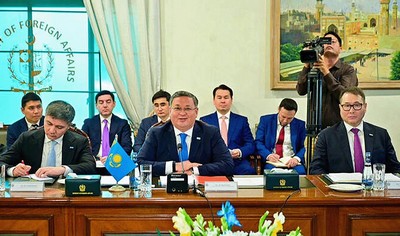
Kazakhstan, Pakistan move to tighten customs controls, boost trade
Abida Shaheen
Islamabad: Kazakhstan and Pakistan are moving to strengthen cooperation against customs violations, improve information-sharing and facilitate cross-border trade after Kazakhstan’s parliament ratified an intergovernmental agreement establishing a formal framework for collaboration between the two countries’ customs authorities.
The agreement, signed in Islamabad on February 4, 2026, was ratified by Kazakhstan’s Qurultay in two readings this week.
The pact provides a legal and organisational basis for the two countries to assist each other in preventing, investigating and suppressing violations of customs legislation, while strengthening coordination to address suspicious trade transactions and improve the monitoring of cross-border goods movement.
Under the agreement, the customs authorities of Kazakhstan and Pakistan will exchange information on export and transit declarations, including declarations considered suspicious. The arrangement is intended to help the authorities identify potential violations more effectively and improve their ability to respond to customs-related offences.
The agreement also establishes safeguards for maintaining the confidentiality and security of information exchanged between the two sides, recognising the importance of protecting sensitive data while expanding institutional cooperation.
A key feature of the arrangement is a request-and-response mechanism through which either country can seek assistance or information from the other’s customs authorities. This framework is expected to provide a formal channel for addressing cases requiring cross-border coordination and support more effective enforcement of customs regulations.
Beyond enforcement, the agreement provides for the exchange of professional expertise and practical experience. Customs officials from either country may be sent to their counterparts’ authorities for training and professional development, allowing both sides to strengthen institutional capacity and improve working practices.
The initiative comes as Pakistan and Kazakhstan seek to expand economic engagement and improve connectivity between Central and South Asia. More effective customs cooperation could help address regulatory obstacles, improve oversight of trade flows and support more reliable movement of goods through regional transport and logistics networks.
For Pakistan, stronger customs coordination with Kazakhstan could complement broader efforts to diversify export markets, develop trade links with Central Asian economies and increase the use of regional transit routes. Kazakhstan, in turn, could benefit from improved institutional coordination with Pakistan as both countries pursue opportunities for expanded commercial and logistical cooperation.
The agreement’s emphasis on information exchange and professional training also provides a mechanism for building closer working relations between the two countries’ customs administrations, potentially helping them respond more efficiently to violations that extend across national borders.
Its implementation is expected to strengthen bilateral cooperation in customs matters, improve the effectiveness of enforcement measures and contribute to the development of trade and transit links between the two countries.
The ratification marks a step towards formalising customs cooperation within the broader Pakistan-Kazakhstan relationship, where improved trade facilitation, transport connectivity and regional economic integration remain important areas of potential collaboration.