
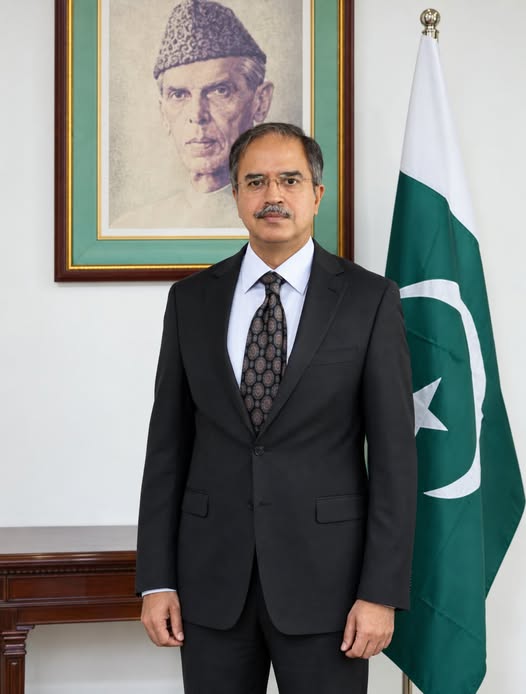
Foreign Secretary Asim Iftikhar Ahmad pledges dedicated service to Pakistan
Liaquat Ali
Islamabad: With an extensive diplomatic career spanning bilateral relations and multilateral engagement, newly appointed Foreign Secretary Asim Iftikhar Ahmad has pledged to serve Pakistan with dedication, describing his appointment as a great honour and reaffirming his commitment to advancing the country’s national interests on the international stage.
In his first public remarks following his appointment, Ambassador Asim Iftikhar Ahmad expressed gratitude for being entrusted with the responsibility of leading Pakistan’s diplomatic service, saying it was a “great honor” to be given the opportunity to serve the country. His brief but meaningful message reflected a sense of professional responsibility and national commitment as he assumes one of the most influential positions in Pakistan’s foreign policy establishment.
For Ambassador Ahmad, the new assignment represents both a significant professional milestone and an opportunity to draw upon years of diplomatic experience at a time when international relations are undergoing profound changes. Intensifying geopolitical competition, regional security concerns, shifting economic partnerships and growing pressure on multilateral institutions have made diplomacy increasingly complex, requiring careful judgment, strategic coordination and sustained engagement.
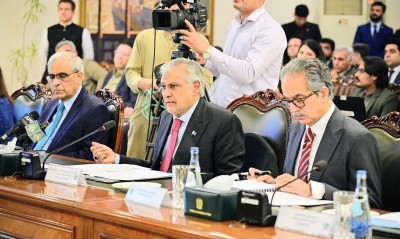
As Pakistan’s senior-most career diplomat, Asim Iftikhar Ahmad will be at the forefront of efforts to translate the government’s foreign policy objectives into diplomatic action, maintain continuity in external relations and ensure that Pakistan’s perspective is effectively represented in bilateral and multilateral forums.
The foreign secretary’s office occupies a central position within the Ministry of Foreign Affairs, overseeing diplomatic coordination, maintaining communication with Pakistan’s missions abroad and facilitating engagement with foreign governments and international organisations. It also serves as an important institutional link between the country’s political leadership and its professional diplomatic machinery.
For Ambassador Asim Iftikhar Ahmad, the immediate challenge will be to build upon Pakistan’s existing diplomatic relationships while helping navigate an increasingly uncertain international environment. The task requires balancing longstanding strategic partnerships with the need to expand economic cooperation, promote regional stability and preserve constructive relations with countries whose interests may differ on key international issues.
Ambassador Asim Iftikhar Ahmad brings considerable experience in international diplomacy to his new position. His career has included important assignments at the United Nations in New York, where he served as Pakistan’s permanent representative, and in France, where he represented Pakistan as ambassador.
These assignments have provided him with exposure to the distinct demands of multilateral negotiations and bilateral diplomacy. While engagement at the United Nations requires coalition-building, consensus-seeking and the careful presentation of national positions, bilateral diplomacy calls for sustained political dialogue, the development of mutual understanding and the identification of practical areas of cooperation.
His experience at the United Nations is particularly relevant to Pakistan’s engagement with the international system. The organisation remains a principal forum for deliberations on international peace and security, humanitarian concerns, sustainable development and the principles governing relations among states.
For Pakistan, effective multilateral diplomacy is essential to communicating its positions on issues of national importance, working with partner countries and participating in discussions that shape international policy. Ambassador Asim’s background in this field provides valuable institutional experience as the Foreign Office continues its engagement with the United Nations and other international bodies.
His diplomatic service in France has also given him experience in managing bilateral relations with a major European partner. Such engagement is important as Pakistan seeks to strengthen political dialogue, expand trade and investment opportunities, encourage educational and cultural exchanges and broaden cooperation with European countries.
The combination of multilateral exposure and bilateral experience is an important feature of Asim Iftikhar Ahmad’s diplomatic profile, positioning him to oversee a foreign policy agenda that extends from traditional political relations to economic diplomacy and international cooperation.
One of the most demanding aspects of the new foreign secretary’s responsibilities will be helping manage Pakistan’s relations with its immediate neighbours and the wider region.
Relations with Afghanistan remain particularly important, given the implications of developments across the border for Pakistan’s security, regional connectivity and economic interests. Addressing cross-border terrorism, promoting regional stability and maintaining effective diplomatic channels require sustained engagement and coordination among relevant state institutions.
Relations with India also remain a major element of Pakistan’s regional diplomatic agenda, particularly in connection with the Jammu and Kashmir dispute and wider questions of peace and stability in South Asia. Pakistan’s diplomatic position on Kashmir continues to be pursued through bilateral engagement and international forums.
At the same time, Pakistan’s relationships with China, the United States and Gulf countries carry substantial strategic and economic significance. Maintaining productive engagement with these partners requires an understanding of their respective priorities, careful diplomatic communication and an ability to identify areas where cooperation can serve Pakistan’s interests.
China remains a key strategic and economic partner, with bilateral cooperation extending across infrastructure, energy, connectivity and other areas. Relations with the United States involve a broad range of issues, including trade, investment, regional security and counterterrorism. Engagement with Gulf countries is equally important because of their economic partnerships, investment potential and longstanding ties with Pakistan.
European partners also offer opportunities for expanding commercial relations, educational cooperation, technology exchange and investment. Strengthening these relationships will require continued diplomatic outreach and a clear focus on mutually beneficial outcomes.
For Ambassador Ahmad, coordinating these diverse relationships will be a central responsibility, particularly as Pakistan seeks to protect its strategic interests while expanding its international economic engagement.
Beyond traditional political and security concerns, economic diplomacy has become an increasingly important component of Pakistan’s external relations.
The Foreign Office plays a significant role in facilitating international investment, promoting exports, opening markets for Pakistani businesses and encouraging cooperation in sectors with potential for growth. Diplomatic missions abroad can also help connect Pakistani enterprises with foreign investors, identify commercial opportunities and support efforts to strengthen the country’s international economic partnerships.
Ambassador Asim Iftikhar Ahmad’s leadership of the Foreign Office will therefore come at a time when diplomacy is expected to contribute increasingly to Pakistan’s economic objectives. Building stronger commercial links, encouraging technology transfer and supporting investment-oriented engagement will remain important areas for institutional coordination.
Effective economic diplomacy also requires close collaboration between the Foreign Office, relevant government departments, business organisations and other stakeholders. By aligning diplomatic outreach with domestic economic priorities, Pakistan can seek to derive greater practical benefits from its international relationships.
The challenge is to ensure that diplomatic engagement translates into tangible opportunities, including expanded trade, stronger investment flows, improved market access and enhanced cooperation in emerging industries.
Another important dimension of Ambassador Asim’s responsibilities will be Pakistan’s engagement with multilateral institutions and international initiatives.
Pakistan has consistently used international forums to articulate its positions on issues involving regional security, international law, peacekeeping and humanitarian concerns. Its diplomatic engagement on Palestine and the rights of the Palestinian people remains a significant part of its international advocacy.
The Foreign Office must also maintain close contact with partner countries on developments affecting regional stability and international peace. This requires a combination of diplomatic outreach, negotiations and sustained participation in international institutions.
In an increasingly interconnected world, public diplomacy has also assumed greater importance. Presenting Pakistan’s perspective clearly, maintaining engagement with international audiences and responding effectively to emerging developments are essential to strengthening the country’s diplomatic outreach.
Ambassador Asim’s experience in multilateral diplomacy will be relevant to these responsibilities, particularly where Pakistan needs to build support for its positions, coordinate with like-minded countries and engage constructively with the wider international community.
Continuity, coordination and leadership
The foreign secretary’s responsibilities extend beyond the management of diplomatic engagements. The office is central to maintaining institutional continuity, ensuring consistency in the implementation of foreign policy and coordinating the work of Pakistan’s diplomatic missions around the world.
Foreign policy decisions frequently involve overlapping political, economic and security considerations. Their effective implementation requires regular communication between the Foreign Office, the political leadership and other relevant institutions.
As the new foreign secretary, Ambassador Asim will be expected to provide professional direction to the diplomatic service, oversee the Ministry’s institutional responsibilities and help ensure that Pakistan’s external engagement remains responsive to changing circumstances.
His appointment also highlights the importance of professional experience in managing the complexities of contemporary diplomacy. International developments can evolve rapidly, requiring diplomatic institutions to assess emerging risks, identify opportunities and respond in ways that protect national interests without closing the door to constructive engagement.
For a country such as Pakistan, whose strategic location connects South Asia, Central Asia, the Middle East and China, effective diplomacy is particularly important. Regional developments can have direct consequences for national security, economic prospects and international partnerships, making sustained diplomatic engagement indispensable.
Ambassador Asim Iftikhar Ahmad’s initial remarks following his appointment were brief, but they conveyed a clear message of gratitude and commitment. By describing the assignment as a great honour and expressing pride in serving Pakistan, he acknowledged the responsibility associated with leading the country’s diplomatic service.
His professional background provides experience across important areas of international engagement, while his new position places him at the centre of Pakistan’s efforts to manage bilateral relations, advance economic interests and represent national positions in multilateral forums.