
UK backs Pakistani climate businesses in $51 million investment drive
Islamabad: Ten Pakistani businesses are seeking a combined $51 million in investment over the next 12 months to scale up climate-friendly technologies and sustainable solutions, with specialist support from the United Kingdom helping them strengthen their business proposals and connect with potential investors.
The businesses are working across five sectors crucial to Pakistan’s green transition: agriculture and land use, waste management and the circular economy, clean energy, sustainable construction and electric mobility. Their investment drive reflects growing efforts to turn climate challenges into opportunities for innovation, economic growth and job creation.
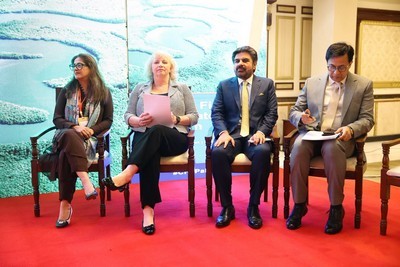
The investment initiative received fresh momentum at the two-day Climate Finance Accelerator (CFA) Pakistan Investor Roadshow, held in Karachi on October 27 and 28. The event brought together the ten businesses with investors, banks, development finance institutions, government representatives and industry stakeholders to explore financing opportunities and build partnerships.
Beyond their immediate funding requirements, the ten enterprises have developed a three-year investment pipeline worth $120 million, highlighting the potential for Pakistani businesses to attract capital into climate solutions while contributing to the country’s environmental and development priorities.
The UK-funded Climate Finance Accelerator Pakistan, implemented by DAI, has supported the businesses with technical and financial advice, helping them improve their investment proposals and prepare to engage with financiers. The programme also incorporates gender equality and social inclusion into its support, recognising the importance of ensuring that climate investment delivers broader social and economic benefits.
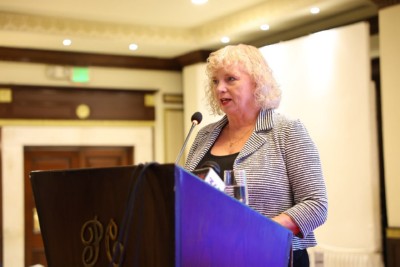
British Deputy High Commissioner in Karachi Alison Blackburne said the UK’s climate partnership with Pakistan was increasingly focused on mobilising climate finance, strengthening adaptation and resilience, and supporting the policy and institutional systems needed to translate climate commitments into practical action.
She said the UK-Pakistan Green Compact, signed with the Government of Pakistan in December 2025, provided a broader framework for cooperation covering climate action, clean energy, finance, policy dialogue, private investment, green skills and international collaboration.
The partnership reflects the UK’s emphasis on mobilising private capital alongside public-sector initiatives to support Pakistan’s transition towards a more sustainable and climate-resilient economy.
For Pakistan, the need to expand climate finance is particularly pressing. Climate-related risks affect agriculture, water resources, urban infrastructure, energy systems and livelihoods, while the transition to cleaner technologies requires substantial investment, technical expertise and effective cooperation between government and business.
Addressing participants at the roadshow, Sindh Minister for Local Government and Housing and Town Planning Syed Nasir Hussain Shah underscored the economic implications of climate change and the importance of creating an environment in which private investors could participate confidently in climate-related projects.
He said climate change was not merely an environmental issue for Pakistan but also a development and economic challenge affecting infrastructure, agriculture, cities, energy systems and people’s livelihoods.
The government’s role, he emphasised, increasingly involved creating the conditions necessary for private capital to flow into sustainable projects.
The message was central to the investor roadshow, which sought to bridge the gap between promising climate-focused businesses and the financing they need to expand. Participants also discussed policy, regulatory and market barriers that continue to constrain private investment in climate solutions.
Vardah Malik, team lead at CFA Pakistan, said the initiative was designed to connect investment-ready Pakistani businesses with financiers capable of supporting their growth and to turn initial discussions into lasting partnerships.
The ten businesses selected for the 2026 cohort offer a diverse picture of the country’s emerging green economy, with solutions ranging from agricultural waste conversion and organic composting to solar energy, biomethane, energy-efficient buildings and electric public transport.
In agriculture and land use, A.S. Enterprises is developing a solution to convert agricultural stubble into bio-coal, offering a potential alternative use for crop residues. TrashIt is working to transform organic waste and crop residue into microbe-enriched compost, supporting more sustainable soil management.
In waste management and the circular economy, Sahara Recycling is developing integrated recycling parks for municipal solid waste, while Waste Busters JV EnterTech is using Black Soldier Fly technology to manage organic waste. Such approaches can help reduce the volume of waste sent to disposal sites while recovering valuable resources from discarded materials.
The clean energy and energy transition category includes Biowaste Energy Ventures Ltd, which is developing a biomethane and waste-to-energy platform; GoSeedIT, which offers a pay-as-you-go solar model for underserved mid-market customers; and BioEnergy Solution Pvt. Ltd, which produces biomass fuel pellets from agricultural and organic waste.
These initiatives seek to expand access to cleaner energy while making productive use of resources that might otherwise be discarded.
In the building and construction sector, EcoEdge AI is applying sensors and artificial intelligence to optimise building energy consumption. Its approach targets a key area for efficiency improvements, as buildings increasingly require solutions to manage energy use and operating costs.
The e-mobility category includes BusCaro, an urban mobility platform connecting commuters with transport suppliers, and Daewoo Express, which is pursuing electric bus fleets and associated charging infrastructure.
Together, the ten businesses demonstrate how climate-focused innovation can extend beyond renewable energy to encompass agriculture, manufacturing, urban services and transport.
The Climate Finance Accelerator has already established a track record in Pakistan. Between 2022 and 2024, the UK-funded programme supported 22 projects and helped mobilise $40 million in investment for climate-related initiatives.
The latest cohort builds on that experience by helping businesses become better positioned to secure financing and expand their operations. If the ten enterprises succeed in attracting the investment they are seeking, their projects could contribute to pollution reduction, improved waste management, cleaner energy access, more sustainable transport and employment generation.
However, turning investment proposals into operational projects will depend on more than investor interest alone. Access to suitable financing, predictable policies, effective regulation and commercially viable business models will remain important factors in determining how quickly these initiatives can grow.
The Karachi roadshow therefore served a dual purpose: presenting individual businesses to potential financiers while encouraging a wider discussion on the conditions needed to attract private capital into Pakistan’s climate sector.
For the United Kingdom, the initiative represents a practical dimension of its climate cooperation with Pakistan, combining technical assistance, investment readiness and engagement with the private sector.
For Pakistan, it offers an opportunity to mobilise international expertise and private finance to support home-grown businesses addressing pressing environmental challenges.
The immediate target is $51 million in investment over the next 12 months. The broader ambition is to build a stronger pipeline of commercially viable climate projects capable of attracting sustained investment, supporting economic development and helping Pakistan move towards a greener, more resilient future.