

Portugal revamps Festival da Canção 2027 with major format changes
Lisbon: Portugal has announced significant changes to its national selection competition, Festival da Canção, introducing an open submission process, a new digital voting platform and a streamlined format as the country prepares for the Eurovision Song Contest 2027 in Burgas, Bulgaria.
Portuguese public broadcaster RTP has confirmed that the 2027 edition of Festival da Canção will take place as a single televised show on Saturday, March 6, abandoning the semi-final rounds used in previous editions.
The competition will also feature fewer entries, with 16 finalists set to compete, compared with 20 songs in the previous edition.
One of the most significant changes is the introduction of an open submission process for songwriters. Under the revised rules, Portugal will move away from its previous system of inviting selected composers, allowing songwriters to submit their work directly for consideration.
The change is expected to widen participation and give more musicians and composers the opportunity to compete for the chance to represent Portugal at Eurovision 2027.
RTP has also announced an overhaul of the voting arrangements. For the first time in the competition’s history, viewers will be able to cast their votes through a dedicated online platform. Traditional telephone voting will remain available, allowing audiences to choose between the two methods.
Submissions for Festival da Canção 2027 will open on November 1 and close on November 30, marking the beginning of Portugal’s selection process for the international competition.
The changes come after Portugal’s participation in Eurovision 2027 was confirmed as part of the announcement of 36 participating countries for the contest in Burgas.
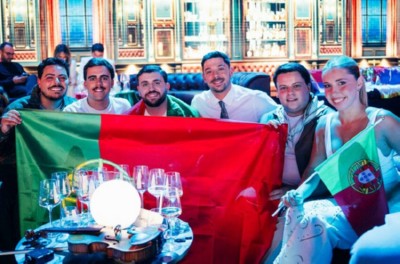
Portugal was represented at Eurovision 2026 by Bandidos de Cante with the song ROSA, but the act failed to qualify from the first semi-final.
With a single-show format, broader access for songwriters and additional voting options, Festival da Canção 2027 will mark a notable shift in how Portugal selects its Eurovision entry.