
Italy presses EU to factor inflation into fiscal targets and budget compliance
Newswire
Rome: Italy this week pressed the European Union to show greater flexibility in applying its fiscal rules, arguing that unexpectedly high inflation, rising energy costs and other economic shocks should be taken into account when Brussels assessed whether member states were meeting agreed budget and deficit targets.
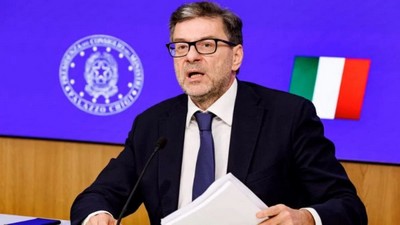
Italian Economy Minister Giancarlo Giorgetti said Rome would raise the issue at the week’s meeting of eurozone finance ministers, making the case that a rigid application of spending rules could place an excessive burden on countries whose fiscal positions had been affected by economic developments that were not fully anticipated when their budget commitments were established.
Giorgetti stressed that Italy was not seeking to abandon the EU’s fiscal framework or challenge the principle of budget discipline. Rather, Rome wanted the rules to be applied in a manner that reflected the economic circumstances confronting member states, particularly when inflation moved significantly beyond the assumptions underlying their fiscal plans.
“We are not questioning the budget rules, but we are asking that the rules be adapted to today’s reality,” Giorgetti said.
Italy’s appeal came as the country faced a sharp acceleration in inflation. Consumer-price growth climbed to 4.1 percent in September from 3.2 percent in August, considerably above the 1.8 percent annual inflation assumption that had been incorporated into Italy’s spending plans agreed with Brussels.
The widening gap between projected and actual inflation had become central to Rome’s argument that fiscal compliance could not be assessed solely against fixed assumptions made before the latest economic pressures emerged.
Giorgetti said inflation was among the factors that needed to be considered when evaluating the country’s fiscal performance.
“We must consider the relevant factors that in some way influence today’s environment,” he said.
The Italian position fed into a wider European debate over the implementation of the bloc’s fiscal framework at a time when governments were confronting unusually volatile economic conditions.
EU fiscal rules allow the European Commission to take relevant circumstances into account when assessing significant deviations from agreed spending and deficit commitments. Italy was seeking greater recognition of the effects of external shocks, particularly those that could materially affect growth and public finances.
Energy costs were among Rome’s principal concerns.
Giorgetti warned that the burden of higher energy prices could reduce Italy’s economic growth next year by at least 0.2 percent of gross domestic product, adding another layer of pressure to an economy already dealing with elevated inflation.
For the Italian government, the issue was not simply the immediate impact of higher prices on consumers and businesses. Inflation and energy costs could also influence tax revenues, government expenditure, investment decisions and overall economic growth, complicating efforts to remain within previously agreed fiscal parameters.
The government was also preparing to approve its 2027 budget, with the measure expected to be finalized the following week. The budget was set to provide an important test of Rome’s ability to balance fiscal consolidation with the need to respond to continuing economic pressures.
The debate was unfolding against a difficult backdrop for the eurozone. European governments were simultaneously attempting to contain public debt and deficits while responding to inflation, high energy costs, geopolitical uncertainty and weaker growth prospects.
Italy’s argument was that fiscal responsibility and flexibility did not necessarily have to be competing objectives.
Rome maintained that governments should remain accountable for their budgetary commitments, but that compliance assessments should also recognize circumstances in which economic conditions had changed substantially from those assumed when the commitments were made.
The distinction was particularly important for countries facing external shocks. A spending or deficit deviation caused by deliberate fiscal expansion could be viewed differently from one resulting from an unexpected surge in energy prices or inflation, according to the logic underpinning Italy’s appeal.
Giorgetti’s intervention therefore sought to open greater space for economic judgment within the EU’s fiscal framework without challenging the framework itself.
The issue was expected to feature prominently in discussions among eurozone finance ministers as governments considered how the bloc’s fiscal rules should operate during periods of heightened economic uncertainty.
For Italy, the immediate priority was to secure sufficient room to implement its 2027 budget while maintaining credibility with Brussels and financial markets.
The government’s position reflected the broader challenge confronting European policymakers: maintaining confidence in fiscal discipline while ensuring that budget rules remained responsive to rapidly changing economic conditions.
As inflation continued to run substantially above the assumptions used in Italy’s earlier fiscal planning and higher energy costs threatened to weigh on growth, Rome sought a more flexible interpretation of the rules — one that would preserve the principles of fiscal responsibility while acknowledging the economic realities facing member states.