
Pakistan seeks to integrate CPEC with Eurasian regional economic corridors
Liaquat Ali
Islamabad: Pakistan’s Minister for Communications Abdul Aleem Khan has reaffirmed Pakistan’s commitment to positioning the China-Pakistan Economic Corridor (CPEC) as a key component of a broader Eurasian connectivity framework by integrating it with the Economic Cooperation Organization (ECO), Central Asia Regional Economic Cooperation (CAREC) and Shanghai Cooperation Organisation (SCO) member states.
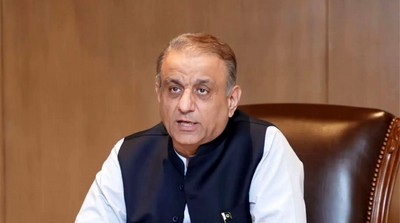
Addressing a high-level panel discussion at the Azerbaijan International Investment Forum in Baku this week, the minister said Pakistan was pursuing a strategic approach to regional connectivity aimed at linking South Asia with Central Asia and other Eurasian markets through modern transport infrastructure, trade facilitation and integrated economic corridors.
He emphasised that deeper coordination between CPEC and major regional connectivity platforms could help establish a durable Eurasian economic bridge, creating new opportunities for trade, investment and transit while strengthening economic linkages between Pakistan, China, Central Asia and other participating countries.
The minister’s remarks highlighted the growing importance of CPEC beyond bilateral Pakistan-China cooperation, particularly its potential role as a connectivity platform linking China’s western regions with Pakistan’s deep-sea ports and onward markets in Central Asia, the Middle East and beyond.
Abdul Aleem Khan said Pakistan was also seeking to expand public-private partnerships to accelerate infrastructure and logistics development, while advancing paperless TIR customs digitalisation to make cross-border movement of goods faster, more transparent and efficient.
He said streamlined customs procedures and digital trade mechanisms would be critical for improving the competitiveness of regional transport corridors and facilitating greater movement of goods across Eurasia.
The minister also drew attention to the economic pressures confronting countries amid global uncertainty, including inflationary pressures on fuel and maritime freight costs as well as geopolitical disruptions that have affected traditional trade routes.
Against this backdrop, he said Pakistan had adopted proactive national austerity measures and maintained stringent fiscal discipline to protect public finances and strengthen the country’s economic resilience.
Abdul Aleem Khan further said Pakistan was positioning itself as a neutral diplomatic venue and constructive mediator during regional conflicts, with the objective of helping de-escalate tensions and safeguarding the continuity of international trade.
He underscored the importance of maintaining reliable maritime connectivity at a time when geopolitical tensions were creating uncertainty for global supply chains.
The minister said Pakistan’s deep-sea ports — Karachi Port, Port Qasim and Gwadar Port — remained fully operational, ensuring continued movement of international cargo and supporting uninterrupted global supply chains.
Gwadar Port, developed with significant Chinese cooperation under the CPEC framework, holds particular significance in Pakistan’s broader strategy to strengthen maritime connectivity and establish links between China, Pakistan and regional markets.
The emphasis on integrating CPEC with ECO, CAREC and SCO connectivity mechanisms also reflects Pakistan’s efforts to leverage its geographic position as a bridge between China, Central Asia, South Asia and the wider Eurasian region.
The panel discussion brought together senior policymakers and economic leaders from across the region, including Azerbaijan’s Minister of Economy Mikayil Jabbarov and Türkiye’s Minister of Treasury and Finance Mehmet Simsek.
Economy ministers and senior officials from Uzbekistan, North Macedonia, Syria, Tajikistan and Montenegro also participated in the high-level discussion, providing a broad regional platform for deliberations on investment, trade connectivity, economic resilience and infrastructure development.