
Kazakhstan to develop 19 dictionaries, six reference guides to standardise Kazakh language
Astana: Kazakhstan is launching an ambitious national initiative to standardise the Kazakh language, with plans to develop 19 core dictionaries and six reference guides aimed at strengthening linguistic consistency, updating language standards and supporting the language’s future development.
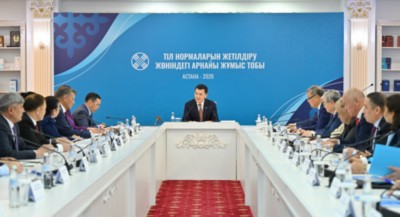
Vice President Erlan Karin announced the initiative during a meeting with linguists, academics and other specialists, stressing that the project would establish a comprehensive regulatory and scientific framework for the modern use of Kazakh.
The meeting brought together members of the National Academy of Sciences, linguists, industry experts, deputies of the Kurultai, government representatives, members of the Kazakhstan People’s Council, media executives and figures from the intellectual community.
Participants discussed mechanisms for coordinating the work, examining proposals and recommendations, and approving standardised rules for the language.
Karin underscored the importance of bringing greater order and consistency to Kazakh spelling, updating existing dictionaries, standardising the use of words and concepts, and making linguistic resources widely accessible through digital platforms.
He described the initiative as a strategic undertaking that had received broad public support, noting that domestic scholars and specialists had been entrusted with a significant national responsibility.
“This strategic initiative has received broad public support. On this basis, domestic scholars and industry specialists are embarking on a major project of national significance. They have been entrusted with an important historical mission,” he said.
According to Karin, the initiative is intended not only to regulate the contemporary use of Kazakh but also to create a strong foundation for its continued evolution.
He said the central responsibility of scholars and experts was to systematise the language’s regulatory framework while establishing the scientific, organisational and technological infrastructure required to sustain its development. He emphasised that the work should be led primarily by qualified researchers and specialists.
Under the programme, six reference guides will be prepared to establish language standards and rules, while 19 core dictionaries will cover a wide range of linguistic fields, including spelling, pronunciation, definitions, grammar, etymology and terminology.
In addition, nine academic translation dictionaries will be developed to strengthen linguistic resources and support the accurate translation of specialised and academic material.
All the materials will be made publicly accessible through Kazakhstan’s national digital platform, the Universal Dictionary of the Kazakh Language, providing researchers, educators, students, government institutions and the wider public with a centralised source of authoritative linguistic information.
The initiative reflects Kazakhstan’s broader efforts to strengthen the status of its national language, improve consistency in its written and spoken use, and adapt linguistic resources to the requirements of contemporary education, research, public administration and digital communication.