
China, US need new generation of bridge-builders, dialogue told
Shanghai event calls for greater understanding, pragmatic cooperation and stronger people-to-people ties amid complex bilateral relations
The Paper
Shanghai: Chinese and American academics, former government officials, business leaders and cultural figures have called for a new generation of “bridge-builders” to strengthen communication, overcome mutual distrust and promote pragmatic cooperation between the two countries.
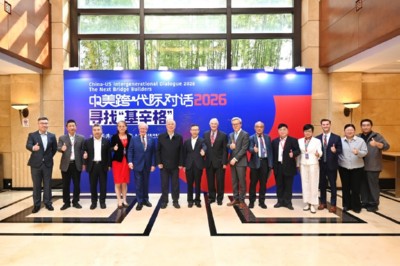
The call came at the China-US Intergenerational Dialogue 2026, titled “Finding Kissinger,” jointly organised by Chinese news outlet The Paper and the Shanghai Institute of International Studies at the Jinjiang Hotel in Shanghai on Friday.
More than 100 participants from diplomacy, academia, business, arts, culture and civil society attended the event, discussing how younger generations could sustain engagement between Beijing and Washington at a time when bilateral relations remain strategically significant and complex.
Speakers stressed that the future of China-US relations could not depend on a single influential figure but required a broader generation of individuals willing to understand each other’s societies, maintain open channels of communication and seek common ground despite differences.
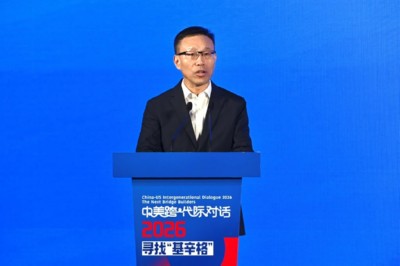
Hu Minghua, Communist Party secretary and president of Shanghai Newspaper Group, outlined three priorities for advancing mutual understanding: providing credible information, building bridges between people and ensuring that the responsibility for dialogue passes from one generation to the next.
He said accurate, comprehensive and reliable information was particularly important when disagreements between the two countries intensified.
“The seemingly grand relationship between China and the United States is ultimately made up of individuals and real interactions,” Hu said, highlighting the importance of bringing together people from diverse professional and social backgrounds.
He added that intergenerational dialogue was not simply about passing established answers from older generations to younger people. Rather, it involved transmitting historical memories, experience, communication channels and a sense of responsibility while allowing young people to develop their own understanding of the relationship.
“As the media, we feel a deep responsibility,” he said.
Chen Dongxiao, president of the Shanghai Institute of International Studies, said the legacy of former US secretary of state Henry Kissinger offered important lessons for contemporary China-US engagement, particularly the need to develop practical experience of cooperation rather than discuss it only in abstract terms.
Building bridges, he said, did not require the two sides to agree on every issue. Instead, it meant keeping communication open, moving beyond stereotypes and identifying areas where cooperation remained possible.
Chen noted that the dialogue brought together participants with different professional backgrounds and perspectives, including former officials, academics, business representatives, non-governmental organisations and artists.
Such diversity, he said, could enrich understanding of bilateral relations and help identify new opportunities for engagement.
Kissinger’s legacy and the next generation
Zhao Qizheng, former director of China’s State Council Information Office, recalled the historical significance of the venue, where Chinese and American representatives signed the Shanghai Communique during US President Richard Nixon’s visit to China in 1972.
He also recounted his interactions with Kissinger, including the former US diplomat’s support for Shanghai’s development of Pudong.
Recalling Premier Zhou Enlai’s description of Kissinger as “very wise and clever,” Zhao said the challenge today was to cultivate a new generation capable of demonstrating a similar commitment to understanding China and sustaining dialogue between the two countries.
China and the United States, he argued, could not rely on a single Kissinger-like figure. Instead, they needed a broader pool of people, particularly young Americans with a genuine understanding of China.
“I believe these are the ‘Kissingers’ of the future,” he said.
Qian Jing, vice-president of the Asia Society in the United States, told participants through a video address that the search for a new generation of bridge-builders was ultimately about continuing efforts to create a peaceful future.
“Today we are looking for Kissinger, but we are also looking for people who are willing to continue this mission to create our peaceful and beautiful future together,” he said. “To continue this mission, we need a bridge.”
During a thematic discussion on China-US relations in a pivotal year, participants examined the prospects for bilateral engagement and the role of dialogue in addressing differences.
Thomas Fingar, a Stanford University professor and former US assistant secretary of state, said the central task of bridge-builders was to remove obstacles to engagement rather than engage in mutual blame.
He stressed that meaningful communication required the courage to speak honestly about disagreements and the willingness to work together to resolve problems.
The purpose of dialogue, he said, was not simply to determine who was right or wrong, but to identify barriers to cooperation and find ways to overcome them.
Fingar described this pragmatic approach to engagement as one of the most important lessons future generations could draw from Kissinger’s diplomatic legacy.
John Quelch, a senior academic leader at Duke Kunshan University, compared the process of building trust between the two countries to constructing a bridge that needed a solid foundation and the confidence of those crossing it.
He said bridge-builders needed to establish strong, balanced foundations that would allow people on both sides to engage with one another confidently and without fear of being prevented from returning.
Zhu Feng, executive director of Nanjing University’s Collaborative Innovation Center for South China Sea Studies, said understanding China’s long history and civilisation was essential to appreciating the foundations of its development.
He also emphasised the importance of mutual respect and a shared sense of humanity, arguing that global peace benefited everyone and should not be subordinated to narrow geopolitical competition.
People-to-people ties at the centre
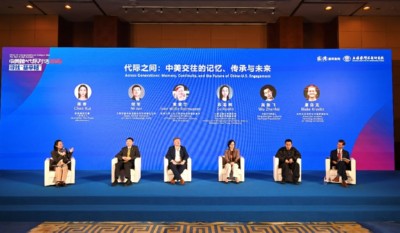
Two round-table discussions examined how personal experiences, cultural exchanges and professional relationships could help strengthen China-US ties across generations.
The first, focusing on the memories, inheritance and future of bilateral exchanges, brought together participants who shared objects and personal stories connected with their experiences of studying or living in China and the United States.
Several speakers highlighted the importance of direct interaction with local residents and students, saying such experiences offered deeper insights into each other’s cultures and helped people integrate into unfamiliar communities.
The second discussion explored the diverse connections underpinning China-US engagement, including business, traditional culture, arts and crafts, education and international exchanges.
Jing Ying, president of the Shanghai Association for the Promotion of International Communication, outlined the organisation’s efforts to promote understanding of Shanghai and China among American audiences and assist foreigners living in the city.
Her remarks highlighted the role of public engagement and civil society in creating opportunities for meaningful exchanges between people from the two countries.
Zheng Yi, president of the American Chamber of Commerce in Shanghai, reviewed the chamber’s history and recalled its cooperation with the Shanghai municipal government in advancing the Shanghai Disney Resort project.
He said China continued to be an important market for American companies, adding that businesses hoped to maintain their presence and achieve further success despite the challenges they faced.
George Rethlas, a documentary filmmaker and descendant of a participant in the Second World War’s Doolittle Raid, discussed his decision to make a documentary about the historic operation and his commitment to preserving its history.
He said the value of the project lay not only in documenting past events but also in inspiring younger generations to undertake similar initiatives.
Chinese pianist Kong Xiangdong, meanwhile, shared his experiences of cultural exchanges between China and the United States, highlighting music’s ability to transcend national, religious and ideological boundaries.
Referring to the Chinese song “Farewell,” which originated from an American folk song, Kong said music demonstrated how cultural traditions could cross borders and connect people.
He also offered to compose music for Rethlas’s documentary, saying the American participants in the Doolittle Raid were heroes whose stories deserved to be remembered and honoured through cultural collaboration.
A bridge to the future
Xia Zhengyu, president and editor-in-chief of The Paper, chaired the opening session and said the publication had sought to uphold professional, open and rational journalistic values since its establishment, reporting on the world from a Chinese perspective while helping international audiences better understand China.
Introducing the dialogue’s themes, “Finding Kissinger” and “The Next Bridge-Builders,” he said the discussions aimed to draw lessons from the experience of earlier generations while encouraging more people to develop mutual understanding and maintain lasting connections.
The event also formed part of The Paper’s broader coverage of China-US relations, with the outlet launching a special reporting project examining the foundations, bridges and safeguards needed to make bilateral ties more stable and resilient.
Organisers said the intergenerational approach was intended to connect historical experience with contemporary challenges and future opportunities, encouraging participants to look beyond official diplomacy and explore the role of individuals, institutions and communities in sustaining engagement.
The discussions underscored a central message: although differences between China and the United States cannot be eliminated through dialogue alone, sustained communication, mutual respect and practical cooperation remain essential to managing disagreements and preserving opportunities for a more stable relationship.