
Abida Shaheen
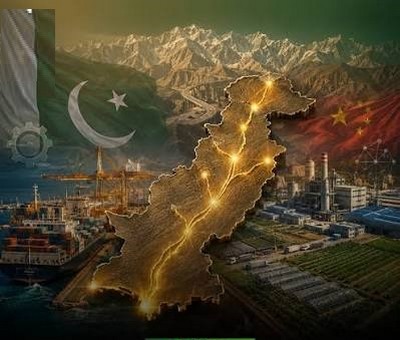
Islamabad: Pakistan has completed 45 development projects under the China-Pakistan Economic Corridor (CPEC) at a combined investment of US $25.61 billion, marking substantial progress in the flagship economic partnership between Islamabad and Beijing, according to Pakistani government documents.
The completed portfolio spans energy, transport infrastructure and economic and social development, underscoring the broadening scope of China-Pakistan cooperation beyond individual infrastructure projects.
According to the documents, the 45 completed schemes include 17 energy projects, 15 infrastructure projects and 13 economic and social development initiatives. Together, these projects have contributed to strengthening Pakistan’s electricity generation capacity, improving road and urban transport networks and supporting development activities aimed at enhancing livelihoods and access to essential services.
The energy component represents one of the most significant achievements of the CPEC programme. Major projects such as the Sahiwal power plant, Port Qasim power project and Suki Kinari hydropower scheme have added to Pakistan’s electricity generation capacity and formed an important part of efforts to address the country’s longstanding energy shortages.
The completion of these projects also illustrates the role of Chinese investment and financing in expanding Pakistan’s power infrastructure, particularly at a time when the country was facing persistent electricity supply constraints and growing demand from households and industry.
The CPEC portfolio has simultaneously transformed important parts of Pakistan’s transport infrastructure.
Among the prominent completed schemes is the Multan-Sukkur Motorway (M-5), a major road link that has strengthened connectivity along the eastern corridor and facilitated movement between important economic centres. The motorway has also enhanced the broader road network connecting northern and southern parts of the country.
The Lahore Orange Line Metro is another high-profile project completed under the CPEC framework. The urban mass-transit system has provided a modern public transport option for residents of Lahore while demonstrating the application of Chinese technology and expertise in Pakistan’s rapidly expanding urban centres.
The infrastructure component of CPEC has therefore extended beyond highways and power plants, contributing to a wider effort to improve mobility, connectivity and the physical foundations required for economic activity.
The government documents also highlight 13 economic and social development projects, reflecting a shift in the CPEC agenda towards people-centred development alongside large-scale infrastructure.
These initiatives have focused on improving livelihoods, access to services and development opportunities, complementing the corridor’s larger objective of promoting economic growth and regional connectivity.
However, despite the completion of 45 projects, Pakistan continues to face challenges in advancing several major schemes included in the CPEC framework.
The Karachi Circular Railway, the Dera Ismail Khan-Zhob Highway and several projects associated with the development of Gwadar are among the projects facing delays.
The outstanding projects underline the financial and administrative complexities associated with major infrastructure schemes requiring substantial investment, long-term financing arrangements and coordination among federal and provincial authorities.
Financing remains a particularly important issue for projects involving large capital requirements, while regulatory approvals, land-related matters, institutional coordination and implementation capacity can also affect project timelines.
The government is continuing efforts to remove these bottlenecks and accelerate implementation of the remaining CPEC projects, with the objective of maintaining momentum in the Pakistan-China economic partnership.
For Beijing, CPEC remains a key component of its broader Belt and Road Initiative and an important platform for strengthening economic connectivity between China and Pakistan. For Islamabad, the corridor is viewed as a long-term framework for infrastructure development, industrialisation, energy security and enhanced regional connectivity.
The completion of 45 projects worth US $25.61 billion consequently represents a significant phase in the evolution of CPEC, even as both sides confront the challenge of translating the completed infrastructure into greater industrial production, trade, investment and employment.
The next phase of the corridor is therefore expected to place greater emphasis on making existing infrastructure economically productive while moving forward with strategically important projects that remain under implementation.
With major power, road, transport and social-development schemes already completed, CPEC has established a substantial physical foundation for Pakistan-China economic cooperation. The focus now is increasingly on ensuring that the infrastructure already created generates sustained economic activity and that delayed projects are brought to completion through improved financing and implementation mechanisms.