
Newswire
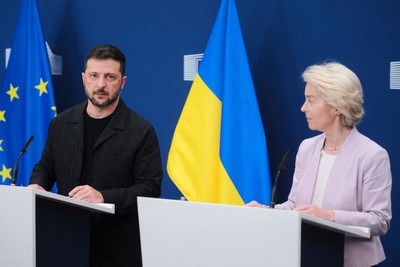
Kyiv: Ukraine is seeking to renegotiate and increase the maximum quantities of agricultural products it can export to the European Union without tariffs, with consultations with the European Commission expected to resume next month as Kyiv faces mounting pressure to secure alternative routes for its farm exports.
Ukrainian Agriculture Minister Taras Vysotsky said this week that the government planned to reopen discussions with Brussels in September over higher quotas for agricultural products considered sensitive by the EU.
“From September we plan to resume consultations with the European Commission on updating and increasing quotas for sensitive items,” Vysotsky said during a meeting with representatives of the Ukrainian agricultural sector.
He urged businesses and industry groups to provide detailed and well-supported data to help the government develop what he described as a strong negotiating position in talks with the EU.
The push comes after Ukraine and the EU agreed last year on revised tariff-free export volumes for a range of agricultural commodities. Brussels maintains limits on products considered particularly sensitive because of concerns among European farmers and member states over the impact of Ukrainian imports on domestic markets.
The restricted categories include poultry, eggs, sugar, honey, wheat and maize, among other agricultural products.
Ukrainian business representatives used Wednesday’s meeting to call for a review of quotas covering sugar, starch, molasses, alcohol and bioethanol, arguing that expanded access to the European market is increasingly important as the country’s traditional export routes remain under pressure.
Ukraine’s agricultural export sector has been particularly affected by repeated attacks on Black Sea ports, which have disrupted maritime shipments and complicated the movement of grain and other commodities. The security situation has increased pressure on Kyiv to diversify export routes and secure greater access to neighbouring EU markets.
Several of the EU’s agricultural quotas for Ukraine were increased in 2025. The annual tariff-free quota for poultry, for example, rose from 90,000 tonnes to 120,000 tonnes, while the sugar quota increased sharply from 20,070 tonnes to 100,000 tonnes.
However, Ukrainian producers argue that the revised limits remain below the volumes they were able to export during the period of full trade liberalisation introduced in the early years following Russia’s invasion.
Under the existing framework, a broader review of the quotas was not expected until 2028, when the EU and Ukraine are due to assess Kyiv’s progress in bringing its agricultural regulations into line with European standards, including requirements concerning animal welfare and pesticide use.
The issue remains politically sensitive within the European Union, particularly in countries bordering Ukraine. Poland, Slovakia and Hungary have continued to maintain unilateral restrictions on certain Ukrainian agricultural imports despite opposition from the European Commission.
Polish Agriculture Minister Stefan Krajewski has recently reiterated that Warsaw does not intend to lift its restrictions on Ukrainian grain, highlighting the continuing divisions within the EU over how far preferential access for Ukrainian agricultural products should be extended.
Ukrainian agricultural representatives also raised concerns over the deteriorating situation in the Black Sea and the need to strengthen the Danube corridor as an alternative export route.
The Danube has become increasingly important for Ukraine’s agricultural trade as the country seeks to reduce its dependence on Black Sea shipping. However, the alternative route is also facing difficulties, with drought and record-low water levels creating additional challenges for the movement of cargo.
Vysotsky said the government intended to exploit every available opportunity to support agricultural exports, including by securing better preferential trading arrangements with the EU and other international partners.
Kyiv’s renewed push for larger tariff-free quotas underscores the growing importance of European markets to Ukraine’s agricultural economy as the war continues to disrupt established export infrastructure and shipping routes.
The European Commission had not confirmed by the time of publication whether formal consultations with Kyiv would begin in September.