

Celina Ali
Islamabad: Portugal’s river basins have maintained healthy water reserves despite worsening drought conditions and declining river levels across much of Europe, offering a rare positive outlook as many countries grapple with mounting water shortages.
Official data from Portugal’s National Water Resources Information System (SNIRH) showed that nearly all mainland river basins recorded above-average water levels at the end of July, with only the Lima and Mondego basins in the north falling slightly below their historical averages.
The figures indicate that Portugal has so far avoided the severe hydrological stress affecting several European nations, where prolonged heatwaves and reduced rainfall have significantly depleted rivers, reservoirs and freshwater supplies.
Among Portugal’s best-performing river basins, the Oeste basin reached full capacity with water reserves at 100 percent, followed by the Mira basin at 94.3 percent and the Barlavento basin at 86.7 percent. These levels highlight the country’s comparatively favourable water storage situation at the height of the summer season.
The Lima basin recorded the lowest water level at 51.9 percent of capacity, below its long-term average of 65.3 percent. The Mondego basin stood at 74.3 percent, slightly below its normal level of 78.2 percent. Other relatively lower-performing basins included the Ave at 66 percent and the Douro at 71 percent.
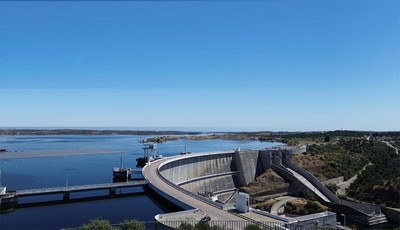
Portugal’s reservoir network also remained in a strong position. Of the 60 reservoirs monitored nationwide, 21 held more than 80 percent of their total storage capacity by the end of July. Significantly, no reservoir reported water availability below 40 percent, underscoring the overall resilience of the country’s surface water resources.
While reservoir and river conditions remain encouraging, meteorological data suggest that parts of the country continue to face dry conditions. The Portuguese Institute of the Sea and the Atmosphere (IPMA) reported that, as of June, around 61.1 percent of Portugal was experiencing mild drought, while a further 2.7 percent was under moderate drought.
Experts caution, however, that meteorological drought—caused by reduced rainfall—and hydrological drought, which affects rivers, reservoirs and dams, do not occur simultaneously. Hydrological impacts generally emerge later, meaning water reserves can remain relatively stable even during prolonged periods of below-average rainfall.
Despite the favourable status of rivers and reservoirs, environmental specialists have warned that Portugal’s underground water reserves present a less optimistic picture. Aquifers, which serve as critical long-term freshwater sources, are reported to be at historically low levels after years of sustained pressure from climate change, groundwater extraction and recurring drought.
Unlike surface reservoirs, depleted aquifers require extended periods of consistent rainfall over multiple seasons to recover fully. Consequently, authorities continue to urge households, businesses and agricultural users to adopt responsible water conservation practices despite the reassuring reservoir statistics.
The contrasting conditions between Portugal’s relatively healthy river systems and Europe’s broader water crisis illustrate the growing complexity of climate-related water management, reinforcing the need for sustainable resource planning even in countries currently benefiting from comparatively robust water reserves.