
Celina Ali
Islamabad: A senior UN-Habitat official is undertaking an extensive mission to Pakistan from September 6 to 18 to deepen cooperation on sustainable and climate-resilient urban development, affordable housing, inclusive settlements and improved municipal services as the country grapples with rapidly expanding cities and growing urban pressures.
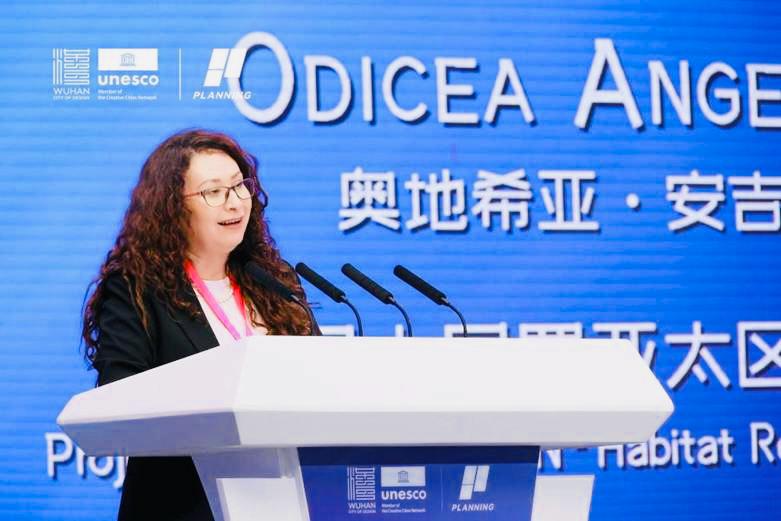
Ms Odicea Angelo Barrios, Human Settlements Officer at the UN-Habitat Regional Office for Asia and the Pacific, will engage with senior government officials, UN agencies, development partners and other stakeholders during her nearly two-week visit, while also undertaking field visits to Islamabad, Karachi and Peshawar to review UN-Habitat-supported initiatives and assess emerging priorities on the ground.
The mission assumes particular significance as Pakistan’s urban centres face an increasingly complex set of challenges, including climate vulnerability, housing shortages, informal settlements, inadequate basic services, weak waste-management systems, disaster risks and the need for more effective and inclusive urban planning.
During her engagements in Islamabad, Barrios will focus on areas including climate-resilient urban development, adequate and affordable housing, disaster risk reduction, access to essential urban services and the development of sustainable and resilient infrastructure.
The discussions are also expected to encompass Pakistan’s National Urban Strategy and efforts aimed at strengthening its implementation, as well as the dissemination and implementation of the National Housing Policy. Data-driven approaches to solid waste management, the proposed National Urban Forum, technical cooperation and opportunities for mobilising resources for urban development are also expected to feature prominently in the discussions.
UN-Habitat has indicated that a major objective of the mission will be to strengthen partnerships capable of translating national policy priorities into practical interventions at the city and community levels.
Potential areas of cooperation include climate-resilient water, sanitation and hygiene services, resilient schools, inclusive and upgraded settlements, disaster risk reduction, green and energy-efficient buildings, sustainable infrastructure and integrated approaches to urban development.
The Islamabad component will also provide an opportunity to examine how national-level policies and strategies can be supported through technical expertise, stronger institutional coordination, improved urban data and targeted investment, particularly as cities confront the growing effects of climate change.
In Karachi, the UN-Habitat mission will turn particular attention to urban governance and the challenges confronting rapidly growing low-income communities and informal settlements.
The discussions will cover upgrading informal settlements, land and tenure security, affordable housing, solid waste management and improved access to basic municipal services. Engagement with provincial and local stakeholders will also focus on strengthening community-based approaches and developing mechanisms that can be institutionalised and replicated across other urban areas.
Barrios is also scheduled to visit the Jam Chakro landfill site to gain a first-hand understanding of Karachi’s solid waste-management challenges. The visit is expected to provide an opportunity to explore possible areas of cooperation in sustainable landfill development, waste segregation, recycling, resource recovery and the promotion of circular-economy approaches.
The UN-Habitat official will also engage with communities benefiting from a Netherlands-funded project focused on upgrading urban slums and promoting peaceful coexistence and gender-responsive social inclusion.
The project is being implemented in 30 settlements across Quetta, Karachi, Peshawar, Kohat and Haripur and seeks to improve basic services, urban connectivity, public spaces, land-tenure security, local institutional capacity, livelihood opportunities and overall living conditions.
Community-level engagement during the mission will allow UN-Habitat to assess the impact of these interventions while also providing residents an opportunity to directly communicate their needs, priorities and aspirations.
The approach is intended to ensure that urban development initiatives are not limited to infrastructure improvements but also address social inclusion, community participation, access to services and the long-term resilience of vulnerable populations.
The mission will subsequently take Barrios to Khyber Pakhtunkhwa, where she will engage with provincial and local government stakeholders on urban policy, spatial planning, local governance, climate resilience and sustainable infrastructure.
Discussions with the Urban Policy Unit are expected to focus on strengthening the use of urban data and geographic information systems, promoting evidence-based decision-making, improving land-use and master planning, expanding affordable housing and addressing the needs of informal settlements.
Field visits in Peshawar will provide an opportunity to review community infrastructure and settlement-upgrading initiatives and to engage directly with communities involved in ongoing urban development programmes.
UN-Habitat’s programme in Khyber Pakhtunkhwa includes participatory planning and infrastructure interventions in settlements in Peshawar, Kohat and Haripur, alongside community mobilisation, public-space development, skills training and initiatives aimed at strengthening resilience to climate-related risks.
The mission will also review implementation progress and lessons emerging from ongoing programmes, including the national-level mid-term review of the Netherlands-funded settlement-upgrading project and activities under the Adaptation Fund-supported urban climate-resilience programme.
Barrios said Pakistan’s cities were confronting some of the most critical urban challenges of the present era, ranging from climate vulnerability and housing pressures to the need to ensure inclusive access to basic services.
She said the mission would provide an opportunity to listen to and learn directly from government counterparts, communities and development partners involved in shaping Pakistan’s urban future.
According to UN-Habitat, such direct engagement is essential for developing practical and locally grounded solutions capable of strengthening resilience, inclusion and sustainability in Pakistan’s cities.
The agency said the visit would help identify practical avenues for expanding cooperation with Pakistani institutions and partners while supporting efforts to build cities that are better equipped to withstand climate-related shocks, provide adequate housing and services, and accommodate growing urban populations in a more inclusive and sustainable manner.
UN-Habitat, the United Nations agency mandated to promote socially and environmentally sustainable towns and cities and adequate shelter for all, has been working with Pakistan’s federal, provincial and local governments on a range of urban-development priorities, including housing and informal settlements, water and sanitation, solid waste management, disaster risk reduction, climate resilience and integrated urban planning.
The mission is therefore expected to provide a broader platform for strengthening technical cooperation and ensuring that urban policies and programmes are increasingly translated into tangible improvements for communities across Pakistan.