
Newswire
Sargodha: The 75-year journey of Pakistan-China diplomatic relations is increasingly acquiring a new dimension as universities and educational institutions emerge as important platforms for strengthening people-to-people contacts, academic partnerships, cultural understanding and youth exchanges between the two countries.
The University of Sargodha (UoS) this week marked the 75th anniversary of Pakistan-China diplomatic relations with a series of events celebrating the longstanding bilateral friendship and highlighting the growing role of education, language, culture and academic cooperation in shaping the next phase of relations.
Chinese Consul General in Lahore Sun Yan attended the main ceremony as chief guest and, together with UoS Vice Chancellor Prof Dr Qaisar Abbas, cut a cake to commemorate the anniversary.
The event was organized by the Pakistan Institute of China Studies (PICS) and brought together senior university officials, academics, faculty members and students, reflecting the growing interest among Pakistani educational institutions in developing stronger links with Chinese counterparts.
A conference titled “Pakistan-China at 75: Reflecting on the Journey, Shaping the Future from Enduring Friendship to a Shared Future” was also organized as part of the celebrations.
The proceedings began with the national anthems of Pakistan and China, setting the tone for a gathering focused not only on the historical evolution of bilateral relations but also on the opportunities for expanding cooperation in the decades ahead.
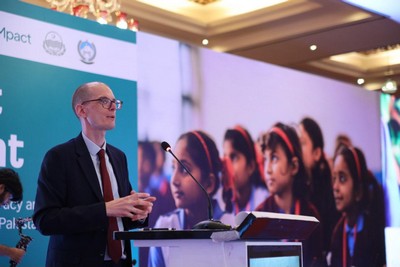
Addressing the gathering, Chinese Consul General Sun Yan said the 75-year relationship had continued to strengthen through mutual affection, cooperation, fraternity and cultural exchanges.
He said Pakistan and China had supported each other during challenging periods, describing their relationship as an example of peace, development and mutual trust in the region.
The Chinese diplomat particularly welcomed the expansion of student exchanges between the two countries, emphasizing the importance of continued interaction among young people in developing a deeper understanding of each other’s societies.
He also appreciated the University of Sargodha’s efforts to strengthen educational cooperation with Chinese institutions, saying universities could make an important contribution to translating the concept of a shared future into practical cooperation.
UoS Vice Chancellor Prof Dr Qaisar Abbas highlighted the personal and institutional dimensions of Pakistan-China educational ties, noting that his own experience of receiving higher education in China had contributed to his close appreciation of the country.
He said the relationship between Pakistan and China extended well beyond economic interests and was rooted in mutual respect, friendship and strong people-to-people bonds.
“Pakistan and China are indispensable to each other,” he said, emphasizing the university’s commitment to expanding cooperation with Chinese universities and institutions.
Professor Abbas said education could serve as one of the most effective instruments for carrying the bilateral relationship into future generations, particularly by increasing student mobility, research collaboration, language learning and joint academic programmes.
He placed particular emphasis on the promotion of the Chinese language in Pakistan, saying language education could significantly deepen people-to-people contacts.
The University of Sargodha, he said, was working with the Confucius Institute to expand Chinese-language learning and provide Pakistani students with greater exposure to Chinese language and culture.
The university is also pursuing joint initiatives with Chinese institutions in several fields, including education, industry and agriculture.
Among the longer-term initiatives being explored are the establishment of a UoS campus in China and cooperation on projects such as a modern hospital, an international boarding school, citrus value addition and cattle farming.
These proposed projects illustrate how academic cooperation is increasingly being linked with practical economic and social development, particularly in areas where Pakistan can benefit from Chinese expertise, technology and experience.
Professor Dr Tahir Mumtaz Awan, Director of the Pakistan Institute of China Studies, provided an overview of the evolution of Pakistan-China relations over the past 75 years, tracing the relationship from the establishment of diplomatic ties to the current vision of a shared future.
He also highlighted the activities of PICS and the Confucius Institute in promoting educational, cultural and academic links between Pakistan and China.
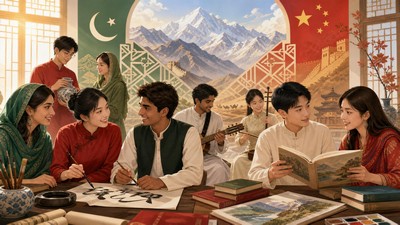
The celebrations included an exhibition of artworks depicting Pakistan-China friendship, organized by the university’s Institute of Art and Design.
Sun Yan inaugurated the exhibition and viewed artworks showcasing Chinese culture and the longstanding friendship between the two countries.
The event also included the distribution of Chinese Ambassador scholarships among students, providing further evidence of the role of educational opportunities in strengthening bilateral relations.
A special video highlighting the Pakistan-China Youth Summer Camp was screened for participants, showcasing another avenue through which young people from both countries are being brought together.
The Chinese consul general also inaugurated a PHEC quiz and essay-writing competition organized to mark the 75th anniversary and opened the university’s China Resource Lounge.
The resource facility is expected to provide students with greater access to information about China, its culture, education system and opportunities for academic engagement.
Sun Yan also visited the university’s History Wall, where he recorded his impressions, and toured various facilities before concluding his visit.
The university presented a souvenir to the Chinese consul general at the conclusion of the programme.
The Sargodha celebrations highlighted a broader transformation taking place in Pakistan-China relations. While economic cooperation under CPEC remains a major pillar of the partnership, education, language, culture and youth exchanges are increasingly becoming important components of bilateral engagement.