
Liaquat Ali
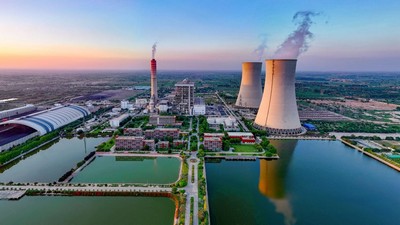
Islamabad: The Sahiwal Coal-Fired Power Plant has emerged as one of the significant energy projects developed under the China-Pakistan Economic Corridor (CPEC), reflecting the corridor’s early focus on addressing Pakistan’s acute electricity shortages and creating the energy infrastructure needed to support industrial and economic growth.
Located at Qadirabad in Sahiwal District of Punjab, the power project was conceived at a time when Pakistan was confronting persistent electricity deficits that had become a major constraint on economic activity. Frequent power shortages affected industries, businesses, agriculture and households, while unreliable electricity supplies were increasingly viewed as a barrier to expanding production and attracting investment.
Developed as an Independent Power Producer (IPP) within the CPEC energy portfolio, the Sahiwal project represented a major intervention in Pakistan’s power-generation capacity. The plant uses supercritical coal-fired technology and was designed to provide a substantial and dependable supply of base-load electricity to the national grid.
From a CPEC perspective, however, the importance of the Sahiwal project goes beyond the addition of generation capacity. It illustrates how the economic corridor’s initial energy programme sought to tackle one of the most immediate structural weaknesses confronting Pakistan’s economy: inadequate and unreliable power supplies.
The project also demonstrated the scale of institutional and technical coordination required to translate a major CPEC investment into operational infrastructure. Large power projects involve extensive planning, financial structuring, regulatory approvals, environmental assessments, engineering, construction and coordination among multiple government and private-sector institutions. The Sahiwal plant brought together Pakistani authorities, Chinese investors, engineering and technical specialists and other stakeholders in a large-scale infrastructure undertaking.
The experience provided an important example of Pakistan-China cooperation in the energy sector, with Chinese technical expertise and investment playing a central role in the development and operation of the facility. The project consequently became part of the broader CPEC model under which Chinese companies participated in addressing Pakistan’s infrastructure and energy requirements.
The economic significance of reliable electricity extends well beyond the power station itself. For Pakistan’s industrial sector, dependable energy supplies are essential for maintaining production schedules, protecting equipment, meeting export commitments and reducing losses caused by interruptions. Stable electricity is similarly important for commercial activity, agricultural processing, services and the wider economy.
In this context, the Sahiwal plant has contributed to the broader objective of strengthening the national power system by supplying electricity to the grid. Its role as a base-load generation facility places it within the infrastructure supporting continuous economic activity, particularly at a time when Pakistan’s electricity shortages had imposed substantial costs on businesses and consumers.
The project also highlights another important dimension of CPEC: human-resource and technical-capacity development. The operation of a utility-scale power station requires engineers, technicians, managers, administrative personnel and other skilled workers. Interaction between Pakistani professionals and Chinese technical teams has provided opportunities for knowledge transfer and practical exposure to modern power-generation systems.
Such cooperation can have benefits beyond a single project. Experience gained in operating and maintaining sophisticated power-generation equipment contributes to the development of Pakistan’s technical workforce and strengthens domestic institutional capacity in the energy sector. In the longer term, these skills can support other infrastructure and industrial projects across the country.
At the same time, the Sahiwal project reflects the complexities of operating conventional thermal power generation in a changing global energy environment. The use of imported coal exposes power generation to fluctuations in international commodity prices, shipping costs and exchange rates. Efficient procurement, inventory management, financial planning and regulatory compliance therefore remain essential to maintaining the plant’s operational performance.
The project operates within Pakistan’s broader power-sector regulatory and financial framework, where issues including tariffs, fuel-cost adjustments and capacity-related obligations influence the economics of independent power producers. Effective management of these factors is critical to ensuring that generation assets remain operational while meeting technical, financial, environmental and regulatory requirements.
The Sahiwal plant also illustrates the evolving nature of Pakistan’s energy challenge. While additional thermal generation helped address the severe electricity shortages that confronted the country during the initial phase of CPEC, Pakistan’s future energy requirements increasingly demand a more diversified and sustainable generation mix.
This is particularly relevant as CPEC itself has expanded beyond its initial infrastructure priorities. Pakistan-China cooperation under the corridor is increasingly associated with renewable energy, hydropower, industrial development, technology and other areas aimed at strengthening the country’s long-term economic resilience.
The growing emphasis on cleaner energy does not diminish the historical significance of projects such as Sahiwal. Rather, the project represents an important stage in Pakistan’s energy transition—from a period dominated by severe generation shortages toward a more diversified system capable of balancing energy security, affordability, industrial requirements and environmental considerations.
For CPEC, the Sahiwal power project therefore carries significance on several levels. It is an example of large-scale Chinese investment in Pakistan, a response to a critical national infrastructure deficit, a demonstration of technical cooperation between the two countries and a component of the energy foundation required for wider economic activity.
The experience also offers broader institutional lessons for future infrastructure development. Major projects require sustained coordination among governments, regulators, investors, engineers and operators, while their long-term success depends not simply on construction but on efficient operation, maintenance, financial management and workforce development.
As Pakistan seeks to strengthen its industrial base and attract investment, reliable energy infrastructure will remain a fundamental requirement. In that broader CPEC narrative, the Sahiwal power plant stands as an important example of how the corridor’s energy investments were designed to address immediate economic constraints while laying part of the infrastructure foundation for Pakistan’s longer-term development.
The project’s legacy, therefore, is not limited to the electricity it generates. It forms part of the larger CPEC story of infrastructure development, Pakistan-China economic cooperation, technical capacity building and efforts to create conditions for sustained industrial and economic growth.