
Celina Ali
Islamabad: Pakistan and Italy this week agreed to build further momentum in their longstanding bilateral relationship, with greater trade, investment, agricultural cooperation and labour mobility emerging as key areas for closer engagement.
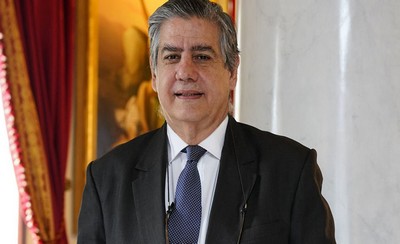
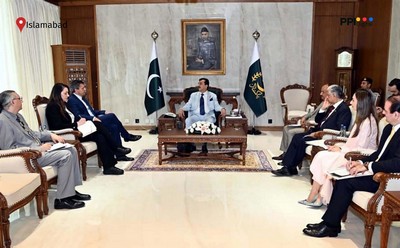
Chairman Senate Syed Yousuf Raza Gilani, while receiving Italian Ambassador Ugo Ciarlatani at Aiwan-e-Sadr, emphasised the considerable scope for expanding economic and people-to-people ties between the two countries.
Gilani said Pakistan attached great importance to its longstanding and friendly relations with Italy, describing the relationship as one based on mutual respect and cooperation across a wide range of fields. He expressed confidence that Ambassador Ciarlatani would contribute to further strengthening bilateral ties during his tenure in Islamabad.
The two sides also discussed the prospects of high-level political engagement. Gilani said Pakistan looked forward to welcoming Italy’s Deputy Prime Minister and Foreign Minister, expressing the hope that the visit would create fresh opportunities for expanding cooperation in areas of mutual interest.
Economic cooperation featured prominently in the discussions, with Gilani stressing that bilateral trade and investment remained well below their potential.
He welcomed the presence of Italian companies in Pakistan and encouraged Italian businesses to explore additional opportunities in the country, particularly in sectors where both sides could benefit from greater investment and technology partnerships.
Agriculture was identified as another area with significant potential, given Pakistan’s large agricultural base and Italy’s expertise in modern farming, food processing, machinery and related technologies.
Gilani also congratulated the Italian envoy on the completion of Italy’s new diplomatic mission in Islamabad, describing it as a positive development that could support deeper diplomatic and commercial engagement.
The chairman highlighted Italy’s existing contribution to Pakistan’s technical and vocational training sector. Among the examples cited were the Pakistan-Italy Textile Centre in Faisalabad and the Footwear Centre in Lahore, initiatives that have helped develop technical skills and strengthen Pakistan’s industrial workforce.
Cooperation between the two countries also extends to scientific and environmental fields, providing further avenues for collaboration beyond traditional trade and diplomacy.
Labour mobility has emerged as one of the most promising dimensions of the Pakistan-Italy relationship, particularly as Pakistan seeks greater opportunities for its skilled workforce abroad while Italy faces demand for workers in several sectors.
Gilani welcomed educational opportunities available to Pakistani students in Italy and stressed the importance of the bilateral memorandum of understanding on workforce, labour migration and mobility.
He said the agreement could help facilitate safe, orderly and legal migration while creating structured opportunities for Pakistani workers.
Italy’s decision to recruit 10,500 skilled Pakistani workers over the next three years was particularly welcomed by the acting president. He said increased labour mobility would not only benefit workers and businesses but would also deepen the human connections between the two societies.
The arrangement could become an important component of bilateral relations, linking economic cooperation with the large Pakistani community already established in Italy.
Ambassador Ciarlatani, who recently assumed his responsibilities in Islamabad, said strengthening bilateral relations and increasing Italian investment in Pakistan would be among his priorities.
He said he was pleased to begin his diplomatic assignment at a time when Pakistan was playing an important role in efforts to promote peace and security in the region.
The ambassador also pointed to the sizeable Pakistani-origin community in Italy, estimated at around 300,000 people, describing them as an important link between the two countries.
Pakistani nationals and people of Pakistani origin living, working and studying in Italy have increasingly become part of the social and economic fabric of the country. Their presence provides a natural channel for strengthening commercial, cultural and educational ties.
The focus on labour mobility therefore carries significance beyond employment. For both Islamabad and Rome, the movement of skilled workers, students and professionals can help create stronger long-term links between the two countries.
The latest discussions indicate that Pakistan-Italy relations are increasingly being viewed through an economic as well as diplomatic lens.
While political contacts remain an important pillar of the relationship, both sides appear keen to translate longstanding goodwill into greater investment, trade, skills development and workforce cooperation.
For Pakistan, Italy offers access to one of Europe’s major industrial economies and a potential partner in areas ranging from manufacturing and agriculture to vocational education and technology.
For Italy, Pakistan represents a large market and a source of skilled labour, while its strategic location and role in regional affairs add further importance to bilateral engagement.
The expected visit of Italy’s Deputy Prime Minister and Foreign Minister could provide another opportunity to advance these priorities and give greater political direction to the economic partnership.
With labour mobility, investment and trade gaining prominence, Islamabad and Rome now face the task of turning their existing agreements and political understanding into concrete opportunities for businesses, workers, students and communities on both sides.