
Newswire
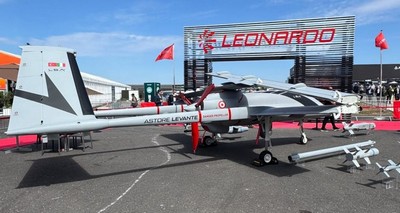
Rome: Italian defence giant Leonardo has established a new company in Ukraine as Italy seeks to tap into Kyiv’s extensive wartime experience in drone warfare, artificial intelligence and battlefield technologies while positioning its defence industry for the next generation of European military systems.
The new entity, Leonardo Ukraine, is wholly owned by the Italian aerospace and defence group and is intended to provide the company with a direct presence in one of the world’s most rapidly evolving defence environments.
The move reflects a growing recognition in Italy and across Europe that the war in Ukraine has created an unprecedented testing ground for unmanned systems, electronic warfare, battlefield intelligence and rapidly adaptable military technologies.
Leonardo’s decision to establish a Ukrainian subsidiary comes as European countries accelerate efforts to strengthen their defence industries and learn from the operational experience accumulated during the conflict.
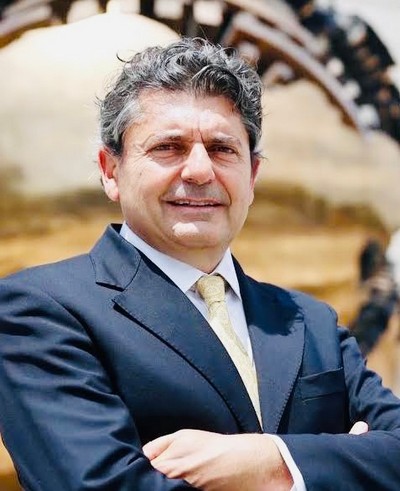
Leonardo chief executive Lorenzo Mariani said at the Farnborough Airshow in Britain in July that Ukraine had developed an exceptional level of operational experience during the war and that cooperation with the Ukrainian drone industry was therefore becoming increasingly important.
The company’s move into Ukraine is expected to focus initially on research and development involving optical and navigation systems. Leonardo Ukraine was registered in Ukraine in May, with share capital of just under €100,000, according to the information cited in reports about the company.
The initiative could ultimately give Leonardo access to Ukrainian expertise developed through continuous battlefield testing, particularly in areas where relatively inexpensive unmanned systems have evolved rapidly in response to changing conditions on the ground.
More than four years of war following Russia’s full-scale invasion have transformed Ukraine into a unique environment for defence innovation.
The conflict has demonstrated how drones, electronic warfare, artificial intelligence and battlefield data can increasingly determine the effectiveness of military operations.
Ukrainian companies have developed and modified unmanned systems at remarkable speed, with technologies repeatedly tested in operational conditions and redesigned according to battlefield results.
Elio Calcagno, a senior fellow for defence and space at the Institute of International Affairs, said Ukraine had developed expertise that could prove extremely valuable for European defence manufacturers and governments.
One of the most important lessons, according to the analysis, has been the ability of Ukrainian companies and military personnel to establish a rapid flow of information between frontline users and engineers.
That feedback loop allows equipment to be modified quickly in response to actual battlefield requirements rather than relying primarily on conventional development cycles and laboratory testing.
Technologies developed or refined in Ukraine include systems capable of operating without conventional GPS navigation, improved resistance to electronic interference and automated target-recognition capabilities.
For European defence manufacturers, such developments offer an opportunity to understand how emerging technologies perform against sophisticated countermeasures in real combat conditions.
Leonardo’s Ukrainian initiative also comes as the Italian company prepares to develop and test advanced air-defence capabilities.
Among the systems attracting attention is the Michelangelo Dome, an integrated air-defence architecture that is being positioned as a potential complement to systems such as the US Patriot and Europe’s SAMP/T.
Leonardo has projected a potentially significant market for the system over the coming decade, and operational experience from Ukraine could provide valuable insights into the requirements of modern air defence.
The Ukrainian battlefield has demonstrated the complexity of defending against a combination of drones, cruise missiles and other airborne threats.
For defence companies, understanding how different air-defence systems respond to such threats is increasingly important, particularly as European governments reconsider their military requirements following the war.
The possibility of testing or refining advanced systems in cooperation with Ukraine therefore represents a potentially significant element of Italy’s wider defence-industrial strategy.
One of the most valuable resources emerging from the Ukrainian conflict is not necessarily hardware but data.
Modern warfare increasingly generates enormous quantities of information through drones, sensors, cameras and other battlefield systems. When that information is systematically collected and analysed, it can be used to improve algorithms and refine the performance of military equipment.
Ukraine has established Brave1, a state-backed defence innovation platform bringing together thousands of companies working on drones, electronic warfare and artificial intelligence.
The ecosystem is designed to connect technology developers with military requirements and accelerate the development of systems capable of addressing battlefield needs.
The associated Brave1 Dataroom has also been used to collect visual and thermal information generated under real operational conditions. Such datasets can help train artificial-intelligence systems to identify and respond to airborne threats.
For companies such as Leonardo, access to this type of operational information could prove increasingly important as artificial intelligence becomes embedded in modern defence systems.
The value lies not simply in observing how a weapon performs, but in understanding precisely why it succeeds or fails under particular conditions.
Italy is not alone in seeking closer links with Ukraine’s rapidly developing defence industry.
Germany and other European countries have increased cooperation with Ukrainian defence manufacturers as Europe seeks to rebuild and expand its military-industrial capacity.
The European Union has also sought to increase support for Ukraine’s defence sector as part of its broader response to the war and its plans to strengthen European defence capabilities.
The Ukrainian defence industry, meanwhile, has increasingly expanded beyond conventional equipment into long-range drones, surveillance platforms, electronic warfare systems and autonomous technologies.
For European manufacturers, cooperation with Ukrainian companies offers access to a form of operational experience that would be difficult to reproduce in peacetime.
Leonardo’s move also needs to be viewed within Italy’s broader efforts to strengthen its position in Europe’s defence sector.
The company is already deeply involved in multinational defence programmes, including through MBDA, the European missile manufacturer in which Leonardo holds a 25% stake alongside BAE Systems and Airbus.
The experience gained from the use of missiles and other weapons in Ukraine can provide manufacturers with valuable information about their performance against modern air-defence networks.
The central lesson for defence planners is that battlefield experience can increasingly influence the design of future weapons almost in real time.
A missile, drone or sensor deployed in combat produces information about its range, reliability, vulnerability to electronic warfare, ability to penetrate defences and effectiveness against specific targets.
That information can subsequently feed back into research and development.
For Italy, establishing Leonardo Ukraine provides a mechanism through which the company can participate more directly in this emerging ecosystem.
It could also help Italian defence manufacturers understand the rapidly changing requirements of warfare and incorporate Ukrainian innovations into future European systems.
The development comes as European governments reassess defence procurement after years in which many military systems were designed largely around assumptions derived from previous conflicts or peacetime planning.
The extensive use of inexpensive drones alongside sophisticated missiles and conventional military equipment has demonstrated that future wars are likely to involve increasingly complex combinations of low-cost and high-end technologies.
For Italy and its European partners, the challenge is now to absorb those lessons without simply replicating wartime systems designed for one particular conflict.
Leonardo’s new presence in Ukraine signals an effort to do precisely that — combine Ukrainian battlefield experience with Italian and European industrial capabilities to develop technologies suited to the rapidly changing character of modern warfare.
The partnership could ultimately benefit both sides: Ukraine could gain access to additional European industrial expertise and investment, while Italy’s defence industry gains closer access to one of the most valuable sources of contemporary military experience.
As Europe accelerates its defence modernisation, the Ukrainian battlefield is likely to remain a major source of lessons for the continent’s military planners and manufacturers.
For Leonardo, the establishment of its Ukrainian subsidiary marks a significant step into that emerging landscape and places Italy closer to the centre of Europe’s effort to turn wartime innovation into the defence technologies of the future.