
Newswire
Lahore: Punjab is moving to expand the use of digital technologies and artificial intelligence in agriculture as part of a broader effort to modernise farming practices, strengthen farmer advisory services and improve the early detection of crop diseases.
Punjab Agriculture Minister Syed Ashiq Hussain Kirmani said digitalisation was becoming a key component of the province’s agricultural transformation agenda, including through cooperation with China and the adoption of advanced digital models.
He made the remarks while chairing a meeting at the Civil Secretariat in Lahore on Monday afternoon to review proposals for using modern digital technologies, artificial intelligence and advanced digital models to support farmers and improve agricultural services.
Punjab Agriculture Secretary Shakeel Ahmad Mian also attended the meeting.
The meeting was briefed on an advanced mobile application for crops developed by Syngenta Pakistan, with officials examining how digital platforms could be integrated into agricultural advisory services and used to provide farmers with more timely and targeted information.
The minister said digitalisation was no longer an optional component of modern agriculture but an increasingly important tool for improving productivity, responding to emerging agricultural challenges and delivering services directly to farmers.
He stressed the need to make farmer advisory services more effective and results-oriented by using digital technologies capable of collecting, processing and analysing agricultural information.
The proposed digital applications could help collect data relating to crop growth and other important indicators, creating a more detailed information base for agricultural decision-making.
The move is particularly significant for Punjab, Pakistan’s largest agricultural province and a major contributor to the country’s food production.
Agricultural digitalisation can potentially allow farmers and government institutions to respond more rapidly to crop diseases, changing weather conditions, pest attacks and other threats affecting yields.
Agriculture Secretary Shakeel Ahmad Mian said modern digital technologies could significantly improve the diagnosis of crop diseases by facilitating their timely detection.
He added that digital platforms could enable farmers to receive appropriate guidance at an earlier stage, potentially reducing crop losses and improving the effectiveness of agricultural interventions.
The meeting also discussed the potential role of public-private partnerships in expanding digital agricultural services.
The Punjab government intends to make greater use of modern applications and AI-based technologies to improve the flow of agricultural information to farmers and strengthen the capacity of extension services.
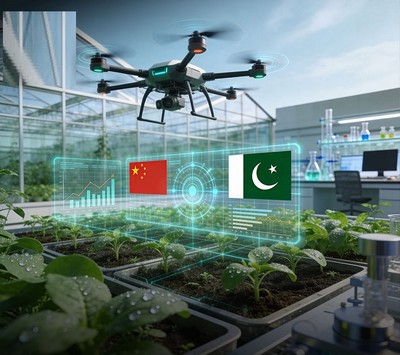
This reflects the wider Pakistan-China push towards technology-based agricultural cooperation, with modern farming techniques, data systems, artificial intelligence and smart agricultural solutions increasingly forming part of the broader economic partnership.
China’s own experience with agricultural digitalisation and technology-driven farming provides a potential model for Pakistan as it seeks to improve productivity and modernise its agriculture sector.
For Punjab, the challenge is not simply to introduce individual mobile applications but to develop an integrated digital agricultural ecosystem in which farmers can access reliable information, government agencies can monitor crop conditions and data can support timely policy decisions.
The use of AI could further expand these capabilities by allowing agricultural information to be analysed at greater speed and scale.
Digital tools could eventually support more targeted crop management, disease identification, advisory services and monitoring of agricultural indicators.
The government’s emphasis on public-private partnerships is also aimed at bringing together state institutions, technology companies, agricultural businesses and farmers to accelerate the adoption of modern tools.
Officials reviewed several proposals for leveraging advanced AI models in agriculture and providing farmers with information suited to contemporary farming requirements.
The initiative comes as Pakistan seeks to improve agricultural productivity while confronting the need for more efficient use of resources, stronger crop monitoring and better access to technical knowledge.
Greater use of digital platforms could help bridge the information gap between agricultural research, government extension services and farmers in the field.
The meeting therefore highlighted a shift in Punjab’s agricultural policy towards technology-driven service delivery, with digital platforms and AI expected to supplement conventional agricultural advisory mechanisms.
By combining digital technologies with agricultural expertise, the province aims to build a more responsive system capable of identifying problems earlier and delivering practical advice directly to farmers.
The broader objective is to make agriculture more data-driven and technologically advanced, while strengthening cooperation with international partners, including China, in areas that can contribute to agricultural modernisation and productivity growth.