
Celina Ali
Islamabad: Deputy Prime Minister and Foreign Minister Ishaq Dar this week briefed Canadian Foreign Minister Anita Anand on the newly signed Makkah Joint Defence Agreement between Pakistan, Saudi Arabia and Türkiye, while the two sides also exchanged views on the rapidly evolving regional situation, including developments linked to the ongoing US-Iran conflict.
The telephone conversation formed part of Pakistan’s diplomatic outreach to international partners following the signing of the landmark agreement, which has drawn attention amid heightened tensions across the Middle East.
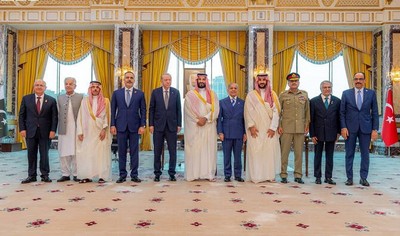
According to the Foreign Office, Dar shared with Anand the essence of the Makkah agreement and conveyed the joint resolve of Pakistan, Saudi Arabia and Türkiye to contribute to regional peace, stability and security.
The agreement was signed in Saudi Arabia following a high-level meeting involving Prime Minister Muhammad Shehbaz Sharif, Turkish President Recep Tayyip Erdogan and Saudi Crown Prince Mohammed bin Salman.
Under the arrangement, an attack against any one of the three participating countries would be considered an attack against all three, establishing a framework for collective defence and closer security cooperation.
For Pakistan, the agreement represents a significant development in its strategic engagement with two key partners, Saudi Arabia and Türkiye. Islamabad has, however, repeatedly emphasised that the arrangement is defensive rather than confrontational in character.
Dar has clarified that the Makkah agreement is not directed against any country and is intended to strengthen collective efforts for peace, stability and prosperity in the wider region.
He has also stressed that the agreement does not replace or invalidate existing bilateral or multilateral arrangements involving Pakistan, Saudi Arabia and Türkiye, nor does it affect their existing commitments with other countries or international organisations.
Pakistan and Saudi Arabia already maintain a bilateral Strategic Mutual Defense Agreement, while Türkiye remains a member of NATO.
The Makkah framework also leaves room for other countries in the region to join, provided they adhere to its fundamental principles and commit themselves to resolving differences through mutual respect, cooperation and peaceful means.
During his conversation with Anand, Dar and the Canadian foreign minister also discussed the evolving situation in the region, particularly the US-Iran conflict and its wider implications for peace and security.
The conflict has heightened concerns over maritime security, energy supplies, regional stability and international trade, particularly because of disruptions affecting strategically important waterways such as the Strait of Hormuz and the Red Sea.
Pakistan has consistently called for restraint, dialogue and peaceful resolution of regional disputes, while maintaining close diplomatic engagement with countries affected by the rapidly changing security environment.
The discussion with Anand also provided an opportunity for Islamabad to explain the objectives and scope of the Makkah agreement to Canada, an important Western partner with which Pakistan maintains longstanding diplomatic relations.
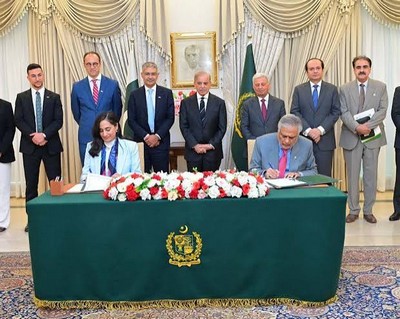
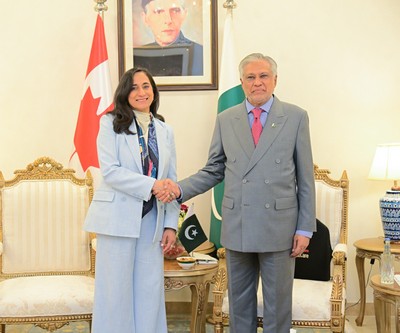
Dar thanked Anand for her recent visit to Pakistan, which had provided an opportunity for the two countries to discuss ways of expanding bilateral engagement.
Pakistan and Canada have been working to strengthen their economic relationship, particularly through greater cooperation in trade and investment, while maintaining dialogue on regional and international issues.
The two foreign ministers agreed to remain closely engaged on matters of shared interest, underscoring the importance of continued diplomatic coordination amid growing geopolitical uncertainty.