
Abdullah Jan
Rawalpindi: Pakistan and Indonesia are stepping up efforts to broaden their economic partnership by promoting direct business-to-business cooperation, addressing trade imbalances and creating fresh opportunities for exporters and investors from both countries.
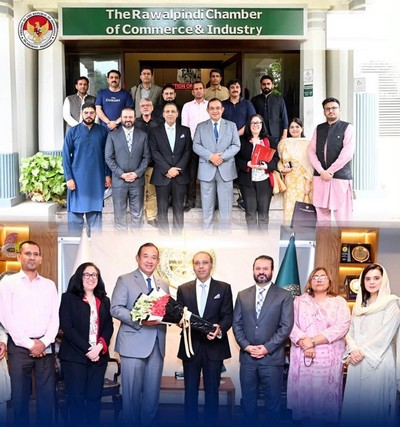
The renewed push for stronger commercial engagement was highlighted during a visit by Indonesian Ambassador Chandra W. Sukotjo to the Rawalpindi Chamber of Commerce and Industry (RCCI) this week, where discussions focused on unlocking the untapped potential of bilateral trade and encouraging greater participation of the private sector.
Both sides viewed the upcoming 41st Trade Expo Indonesia, scheduled for October 14-18, as a key platform to accelerate commercial cooperation and establish long-term partnerships between businesses from the two countries.
During the meeting, Ambassador Sukotjo reaffirmed Indonesia’s commitment to expanding trade and investment ties with Pakistan, emphasizing the importance of stronger engagement between entrepreneurs, exporters and industry representatives. He informed the business community that Indonesia had simplified visa procedures for Pakistani business travellers and was also considering reducing visa fees to facilitate greater commercial mobility.
The ambassador extended a formal invitation to Pakistani companies to participate in the Trade Expo Indonesia, where exhibitors from diverse sectors including food and beverages, agriculture, fashion, industrial products and furniture will showcase their products. The exhibition is expected to provide Pakistani exporters with greater access to Indonesia as well as wider ASEAN markets.
Despite longstanding economic relations, bilateral trade between Pakistan and Indonesia remains below US$5 billion annually, a figure both governments and business leaders believe falls significantly short of its actual potential.
RCCI President Usman Shaukat noted that considerable room exists to increase trade volumes and diversify economic cooperation beyond traditional commodities.
He said both countries were exploring collaboration in a broad range of high-value sectors, including agriculture, halal food products, textiles and garments, pharmaceuticals, information technology and renewable energy, with the objective of creating a more balanced and sustainable trade relationship.
Shaukat also highlighted the growing potential for Pakistani exports of halal-certified meat, fresh fruits and seafood, describing these sectors as promising areas for expanding bilateral commerce and strengthening supply chain cooperation.
The discussions reflected the shared commitment of Pakistan and Indonesia to deepen economic engagement through enhanced private-sector collaboration, increased market access and broader regional trade connectivity.