
Gwadar Pro
Lahore: Pakistan and China are poised to significantly deepen cooperation in cotton research, seed development and agricultural technology transfer, with industry experts describing bilateral collaboration as a crucial pathway for revitalising Pakistan’s cotton sector and strengthening the country’s textile-driven economy.
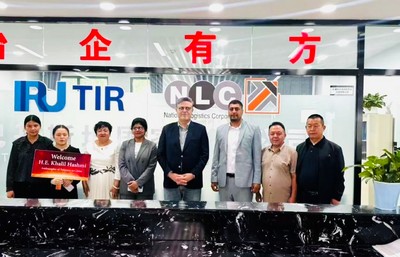
Speaking during a meeting at the Secretariat of the Pakistan China Joint Chamber of Commerce and Industry this week, PCJCCI Commercial Ambassador Adeel Munawar said Pakistan possesses all the essential ingredients to remain a global cotton producer, including strong genetic resources, extensive cultivation areas, experienced farmers and one of the world’s largest textile industries that depends heavily on locally produced cotton.
Despite these inherent strengths, he observed that Pakistan harvested only 5.6 million bales during the previous season, the country’s lowest production level in nearly three decades, highlighting the urgent need for science-based farming practices and greater technological intervention.
Munawar stressed that Pakistan’s cotton challenges are not rooted in a lack of agricultural potential but rather in inconsistent crop management. According to the commercial ambassador, cotton production is fundamentally driven by scientific management and precision agriculture rather than random chance, making technology transfer and farmer education increasingly important for Pakistan’s agricultural future.
Highlighting the expanding China-Pakistan partnership in agricultural innovation, Munawar said Pakistan’s heat-resistant cotton varieties complement China’s strengths in producing high-yield and premium-quality cotton. The combination of the two countries’ germplasm resources provides significant opportunities to develop improved cotton varieties capable of delivering better productivity under Pakistan’s climatic conditions.
He explained that Chinese cotton seeds can be introduced into Pakistan for adaptability trials before selecting the most suitable varieties for commercial cultivation. The joint development of new cotton strains, he added, represents a practical example of the growing agricultural collaboration between the two countries.
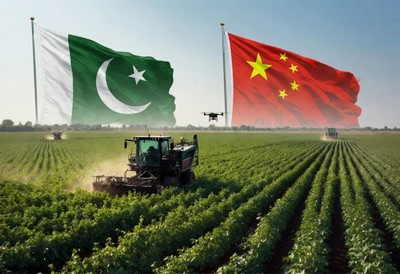
Munawar further revealed that Xinjiang Agricultural University has been collaborating with Pakistani universities for several years on cotton cultivation research. Experimental fields have already been established in Faisalabad, while future plans include testing mechanised cotton harvesting in Pakistan using Chinese expertise.
Drawing attention to China’s achievements in agricultural modernisation, he noted that mechanisation rates in North Xinjiang, one of China’s largest cotton-producing regions, have reached approximately 90 percent, with machine harvesting becoming the industry standard.
He said Xinjiang’s internationally recognised innovations in drought-resistant farming, drip irrigation systems, water-saving technologies and plastic mulching techniques could play a transformative role in improving Pakistan’s cotton productivity while addressing increasing water scarcity.
Speaking on the occasion, PCJCCI Secretary General Salahuddin Hanif announced that a modern biotechnology Centre of Excellence laboratory is expected to be established at the Central Cotton Research Institute to accelerate scientific research and innovation in Pakistan’s cotton sector.