

Newswire
Tokyo: Scientists have identified a hidden layer of soft, slippery clay beneath the Pacific Ocean that they say played a crucial role in amplifying the devastating 2011 earthquake and tsunami in Japan, a discovery that could significantly improve the prediction of future megaquakes and tsunamis.
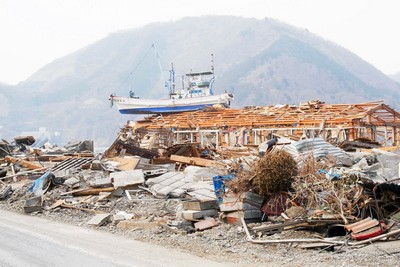
The findings, published in the journal Science, are based on a record-breaking deep-sea drilling expedition that reached farther beneath the ocean floor than any previous scientific mission. Researchers say the discovery provides new insights into why the magnitude 9.1 earthquake generated an exceptionally powerful tsunami that claimed nearly 20,000 lives and caused more than $200 billion in damage.
Led by researchers from Northern Arizona University and an international team of scientists, the study found that a thin, clay-rich sediment layer beneath the Japan Trench acted as an unusually weak surface, allowing the earthquake rupture to travel all the way to the seabed.
According to the researchers, this enabled the ocean floor to shift by an estimated 130 to 200 feet within minutes, dramatically increasing the displacement of seawater that generated the catastrophic tsunami.
The breakthrough followed a scientific expedition aboard the research vessel Chikyu, which drilled approximately 26,000 feet beneath the ocean floor. The mission was recognised by Guinness World Records as the deepest scientific ocean drilling project ever completed.
Analysis of recovered samples revealed a nearly 100-foot-thick layer of ancient pelagic clay formed over millions of years from microscopic marine sediments. Sandwiched between much stronger rock formations, the weak clay layer created a natural pathway that concentrated the earthquake rupture and allowed it to propagate rapidly toward the seafloor.
Researchers said the discovery challenges previous assumptions about how major subduction-zone earthquakes behave and helps explain why the 2011 event produced such extraordinary seafloor movement.
The team believes similar weak sediment layers could exist in other earthquake-prone regions, making the findings relevant far beyond Japan. Mapping these geological features, they said, could help scientists identify areas at greater risk of generating powerful tsunamis.
The researchers also noted that tsunami hazards extend well beyond the regions where earthquakes originate, affecting coastlines across entire ocean basins, including areas such as Hawaii and other Pacific nations.
Scientists hope the findings will contribute to more accurate earthquake and tsunami hazard assessments, improved building standards, stronger disaster preparedness strategies and more effective evacuation planning for vulnerable coastal communities.
They said a better understanding of the geological conditions beneath the seafloor could ultimately help reduce the human and economic toll of future large-scale seismic disasters.