
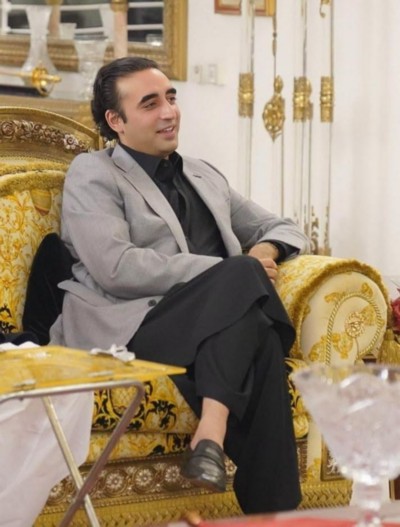
Bilawal Bhutto urges federal government, PTI to resume dialogue, prioritise national interests
Liaquat Ali
Islamabad: Pakistan Peoples Party (PPP) Chairman Bilawal Bhutto Zardari this week called on the federal government and opposition parties, particularly the Pakistan Tehreek-e-Insaf (PTI), to keep the door open for dialogue, warning that persistent political confrontation could undermine efforts to address the country’s pressing challenges.
Addressing a ceremony in Larkana after laying the foundation stone of a modern 600-bed hospital, Bilawal urged the federal government to abandon its tendency to engage in confrontations with political opponents and instead pursue meaningful consultations with all stakeholders.
He thanked Prime Minister Shehbaz Sharif for accepting the PPP’s proposal to establish an electoral reforms committee, describing the initiative as a potentially significant first step towards bringing political parties onto a common platform and addressing fundamental weaknesses in the electoral process.
Bilawal said he had already reached out, through delegations, to opposition leaders in the Senate and the National Assembly, urging them to nominate their full representation to the proposed committee.
He stressed that the federal government should prioritise engagement with political, social and provincial stakeholders rather than remain embroiled in disputes with various political parties.
Pointing to the country’s multiple challenges, including terrorism and strained relations with India and Afghanistan, the PPP chairman said the national leadership could not afford to expend all its energy on political rivalries when the country needed collective efforts to overcome serious security and economic difficulties and alleviate public suffering.
Bilawal reiterated his appeal to both the PTI and the federal government not to shut the door on negotiations. He said that if the government and the PTI could reach an understanding on a joint strategy to combat terrorism, he would be the first to demand the withdrawal of governor’s rule in Khyber Pakhtunkhwa.
He made it clear that the PPP’s position was rooted in two principles: respect for the democratic mandate and an unwavering commitment to fighting terrorism.
Political differences, he maintained, should not overshadow the responsibility of protecting citizens’ lives and property and eliminating the menace of terrorism.
Referring to the PTI’s previous insistence that a meeting with its incarcerated founder or his release should precede political engagement, Bilawal said the party founder had now given opposition leaders in both Houses of Parliament full authority to make decisions.
He urged the relevant parliamentary leaders to exercise that authority and ensure the PTI’s participation in the electoral reforms committee.
Bilawal cautioned that if the PTI declined to join the committee despite repeated invitations and efforts to secure its participation, it would eventually have to consider how it could credibly take its complaints and allegations of electoral rigging to the public while remaining absent from a parliamentary forum established to address such concerns.
Responding to Jamiat Ulema-e-Islam-Fazl chief Maulana Fazlur Rehman’s assertion that major national decisions were being taken outside Parliament, Bilawal said the PPP had consistently advocated a strong, effective and empowered legislature.
He argued that opposition parties also had a responsibility to strengthen Parliament by participating in its committees and institutional forums, including the financial committee, the judicial commission and the proposed electoral reforms committee.
If opposition parties chose to stay away from these platforms and subsequently complained about Parliament’s weakening role, they should also examine their own contribution to the situation, he said.
Bilawal maintained that responsibility for Parliament’s shortcomings could not be placed solely on the government, as the conduct and decisions of opposition parties also played a part.
He invited all political forces to take the electoral reforms committee as an opportunity to begin rebuilding parliamentary strength, even if they could initially agree on this single issue.
All political parties, he said, recognised the importance of electoral reforms and should therefore come together within Parliament, participate in the committee and work towards consensus-based decisions to improve the electoral system.