
Newswire
Brussels: NATO and the European Union this week warned that Russia is becoming increasingly reckless in its activities across Europe, pledging a stronger and faster response as Germany accuses Moscow of orchestrating a failed drone attack at Leipzig airport.
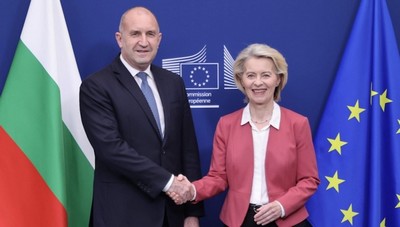
European Commission President Ursula von der Leyen described the incident as a serious escalation, saying Leipzig represented a new type of threat unfolding directly on European Union territory.
“Leipzig marks a new escalation on European Union soil directly attributed to Russia,” von der Leyen said, warning that Europe must adapt to what she described as a growing pattern of Russian “recklessness”.
“We have to step up and that means being ready to respond to Russia’s recklessness faster and better,” she said during a meeting with NATO Secretary General Mark Rutte in Brussels.
Rutte said the entire NATO alliance, including the United States, stood in “full solidarity” with Germany, signalling that Berlin’s concerns were being viewed within the wider framework of European security.
Germany has accused Russia of being behind a failed drone operation at Leipzig/Halle airport on August 4, in which a drone carrying explosives allegedly targeted a Ukrainian cargo aircraft.
The drone was eventually defused by a bomb-disposal robot, while a second drone was believed to have collided with another cargo plane. A third drone was reportedly discovered at the airport about 10 days later.
The airport is strategically important because it serves as a NATO logistics hub and is regularly used by Ukrainian Antonov transport aircraft.
Berlin said its conclusion that Russia was responsible was based on police investigations and intelligence assessments. German Interior Minister Alexander Dobrindt said the drone’s configuration, components, explosives and detonator were consistent with equipment previously identified in Russian hybrid operations.
Two suspects have reportedly been identified. One is a Belarusian national travelling on a Russian passport who entered Germany on a tourist visa. The other reportedly holds Latvian and Russian passports and had arrived by air in Berlin before leaving Germany two days ahead of the failed attack.
Moscow has rejected the accusations, saying Germany has failed to provide evidence supporting its claims.
Germany has responded by announcing measures against Russian diplomatic and cultural institutions. Berlin said it would close the Russian consulate in Bonn as well as the Russian House cultural institution, which German officials and critics have long accused of functioning as a platform for Kremlin messaging.
The Russian Foreign Ministry condemned the measures and threatened a “mirror-image” response, while summoning Germany’s chargé d’affaires Bernd Finke to protest what Moscow called entirely unfounded accusations.
President Vladimir Putin described Germany’s actions as a serious mistake that ran against the interests of the German people.
Russian Deputy Foreign Minister Alexander Grushko went further when asked whether Moscow could sever diplomatic relations with Berlin, replying “maybe” while stressing that Russia was still giving diplomacy a chance.
German critics have argued that Berlin’s immediate response was relatively restrained. The government, however, appears to be seeking a broader coordinated response with European partners, including tougher EU sanctions and restrictions on Russian visitors.
The Leipzig incident has also pushed the issue onto the broader European agenda.
EU foreign ministers meeting in Ireland discussed possible additional measures against Russia, including action against Moscow’s so-called shadow fleet of vessels used to transport oil and other cargo while circumventing sanctions.
France, Belgium and the Netherlands have summoned Russian ambassadors over the incident, while Lithuania warned that Moscow appeared to believe it could conduct hybrid operations against European countries without paying a significant political price.
EU foreign policy chief Kaja Kallas said member states were examining ways to strengthen enforcement of existing sanctions. She also pointed to growing support for restrictions on Russian ex-combatants entering the EU and tighter visa rules for Russian tourists.
Several EU countries, including Sweden, the Netherlands, Poland and Spain, are also pressing for more than €193 billion in frozen Russian assets to be used to support Ukraine.
The proposal remains controversial, particularly in Belgium, where much of the frozen Russian money is held. Brussels has resisted the move because of concerns that it could ultimately face financial liability through legal challenges.
For European leaders, however, the Leipzig incident is significant not simply because of the airport itself but because it fits what they see as a wider pattern of increasingly aggressive Russian activity.
Von der Leyen said Europe was facing a broader campaign involving drones, interference with critical infrastructure and other forms of hybrid activity.
Rutte similarly warned that NATO members on the alliance’s eastern flank were facing greater risks from drones and missiles crossing their territory.
He also pointed to what he described as malign activities directed against NATO countries, including fires at factories producing defence equipment for Ukraine and the alleged Russian operation at Leipzig.
The warnings came as Germany reported fresh suspected sabotage incidents.
Police were investigating two attacks on electricity substations, including one at Bergheim in western Germany near Cologne. Authorities had not established who was responsible, but North Rhine-Westphalia Interior Minister Herbert Reul said the attack on power infrastructure was deliberate.
Whoever carried it out, he said, was effectively attacking Germany as a whole.
The developments have reinforced fears among European governments that the confrontation with Moscow is moving beyond the battlefield in Ukraine into a wider contest involving sabotage, cyber operations, disinformation, critical infrastructure and covert activity on European soil.
For NATO and the EU, the emerging challenge is how to respond without allowing individual incidents to trigger an uncontrolled escalation — while making clear that attacks or hostile operations inside European territory will carry consequences.