

Newswire
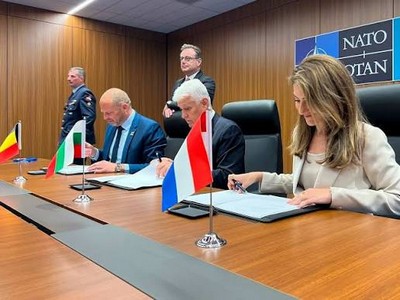
Sofia: Bulgaria has approved a major expansion of its naval mine-countermeasures capability, with Parliament ratifying agreements that will allow the country’s Navy to acquire seven minehunters from Belgium and the Netherlands as Sofia continues efforts to strengthen its defence capabilities and meet NATO operational requirements.
The Bulgarian National Assembly voted this week to ratify the sale and transfer arrangements covering the seven vessels, marking an important step in the modernisation of the Bulgarian Navy.
At the second-reading stage, 168 lawmakers took part in the vote, with 162 voting in favour and six against, while no MP abstained.
Support for the agreements came from Progressive Bulgaria, GERB-UDF, the Movement for Rights and Freedoms, Democratic Bulgaria and We Continue the Change. The only opposition came from the pro-Russian Vuzrazhdane party, which has consistently challenged a number of Bulgaria’s defence-related decisions involving NATO allies and Western military equipment.
Under the agreement with the Netherlands, Bulgaria will acquire three Dutch minehunters — Zierikzee, Willemstad and Schiedam.
A separate transfer agreement involving Belgium, the Netherlands and Bulgaria provides for four additional vessels, Crocus, Lobelia and Primula, to be transferred to the Bulgarian Navy.
The combined acquisition will give Bulgaria seven specialised vessels designed to locate and neutralise naval mines and other mine-like objects, strengthening the country’s ability to protect its maritime approaches and support mine-clearance operations.
The vessels are capable of operating according to NATO standards, an important consideration for Bulgaria as a NATO member seeking greater interoperability with allied naval forces.
The Dutch arrangement includes a commitment to restore the technical condition of the vessels and enhance their operational capabilities before ownership is transferred to Bulgaria.
The broader memorandum of understanding covers not only the ships themselves but also a package of associated support measures, including crew training, spare parts and additional equipment.
The arrangement is therefore intended to provide Bulgaria with an operational capability rather than simply a fleet of second-hand vessels.
For the Bulgarian Navy, mine-countermeasure capability has particular strategic importance because naval mines can restrict access to ports, shipping routes and coastal waters while posing a threat to military and commercial vessels.
The acquisition will consequently strengthen Bulgaria’s ability to conduct mine detection and clearance operations and contribute to broader maritime security in the Black Sea and surrounding waters.
Under the terms of the memorandum, Bulgaria has undertaken to finance repair and restoration work on the seven minehunters to bring them to a level consistent with NATO operational readiness standards.
The Bulgarian side has also been responsible for training Ukrainian minehunter crews, a requirement that has already been fulfilled.
The Ukrainian component adds a wider regional dimension to the agreement, reflecting the increasing importance attached to mine-countermeasure capabilities in the Black Sea amid the continuing security challenges affecting the region.
Earlier, Defence Minister Dimitar Stoyanov told Parliament’s defence committee that restoration and repair work on each vessel could cost as much as €6 million.
The first Belgian minehunter is expected to arrive in Bulgaria during September or October 2026, according to the defence minister.
The arrival will mark the beginning of a phased process through which Bulgaria will integrate the vessels into its naval structure and bring their capabilities up to the required operational standards.
The parliamentary approval comes as Bulgaria continues to strengthen its armed forces and modernise ageing military equipment in line with its NATO commitments.
The minehunter programme is part of a broader effort to improve the country’s maritime capabilities and ensure that Bulgarian forces can operate effectively alongside allied navies.
The vessels are expected to provide Bulgaria with additional flexibility in dealing with underwater threats while also improving its contribution to NATO maritime security missions.
Bulgaria also modifies US defence contracts
In a separate defence-related vote on August 26, Bulgaria’s Parliament also approved amendments to three agreements with the United States covering the acquisition of Stryker combat vehicles, ammunition and Javelin anti-tank missiles.
Once again, lawmakers from Vuzrazhdane were the only MPs to vote against the changes.
The amendments adjust the financial and delivery terms of the existing US defence contracts.
The contract for Stryker combat vehicles will increase by approximately $44.79 million following the postponement of the planned acquisition of 17 SkyRaider unmanned aircraft systems and associated equipment.
The Javelin contract will rise by approximately $4.73 million, primarily because of provisions related to earlier delivery and spare parts.
At the same time, the contract covering ammunition will be reduced by approximately $12.58 million.
The separate parliamentary approvals underline Bulgaria’s broader drive to modernise its military capabilities through closer cooperation with NATO partners.
The naval minehunter programme, in particular, gives the country an enhanced ability to address a specialised but increasingly important maritime security challenge.
By acquiring vessels from established NATO naval partners and investing in their restoration, equipment and crew training, Bulgaria is seeking to develop a more capable and interoperable mine-countermeasure force.
The combination of the European naval acquisitions and expanded US defence cooperation reflects Sofia’s continuing effort to align its military modernisation with NATO requirements while strengthening its ability to respond to security challenges in the Black Sea region.
For Bulgaria, the arrival of the seven minehunters will represent a significant addition to its naval inventory, while the associated training, repairs and equipment are intended to ensure that the vessels can become fully operational assets rather than merely additions to the fleet.