

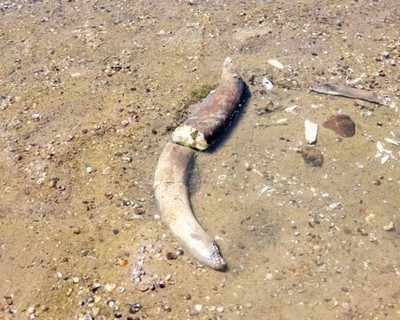
Sofia: The remains of what is believed to be an ancient mammoth have been discovered in northern Bulgaria after the Danube River receded to a record low level, exposing prehistoric bones that had remained buried beneath the riverbed for thousands of years.
The discovery was made by a resident of Ryahovo village, who noticed unusual bones protruding from the exposed riverbed and alerted specialists from the Regional History Museum in the nearby town of Ruse.
Museum experts who examined the site identified what appears to be a lower jaw, two tusks and possibly a rib belonging to a mammoth. The remains are scheduled to be carefully removed for detailed examination to determine their precise origin, age and scientific significance.
Museum Director Nikolay Nenov said the discovery, while not unprecedented, represents an important contribution to scientific research and understanding of the region’s prehistoric past.
He noted that researchers have long believed the site was once a swamp, suggesting the mammoth may have become trapped and died there thousands of years ago before its remains were gradually buried beneath layers of sediment.
Scientists will conduct further analysis to confirm the identity of the animal and establish its age, findings that could provide new insights into the prehistoric environment and the distribution of mammoths across southeastern Europe.
The discovery comes as exceptionally low water levels in the Danube continue to expose archaeological and historical remains that are normally hidden beneath the river’s surface.