
Celina Ali
Islamabad: Pakistan this week called on the United Nations Security Council (UNSC) to ensure the full implementation of the Gaza ceasefire and the internationally endorsed peace framework, warning that any further delays could jeopardise hopes for a just and lasting peace and undermine the prospects of an independent Palestinian state.
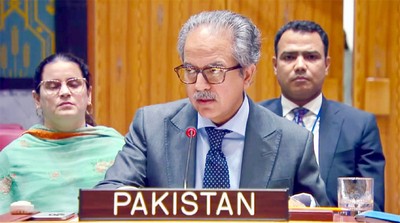
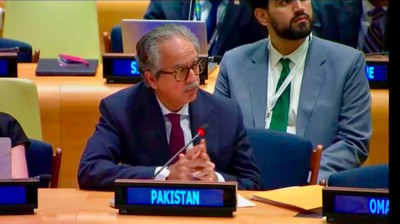
Speaking during the UN Security Council’s open debate on the Middle East, Pakistan’s Permanent Representative to the United Nations, Ambassador Asim Iftikhar Ahmad, said the current moment presents a critical opportunity to alleviate humanitarian suffering in Gaza while advancing a credible path towards Palestinian self-determination and statehood.
He described the latest United Nations assessment of the Occupied Palestinian Territory as deeply alarming, saying the humanitarian situation remained severe despite the ceasefire and the broader peace initiative endorsed by the Security Council. According to the ambassador, the framework provides an opportunity to move beyond the cycle of conflict, but only if all parties honour their commitments without delay.
“It is imperative to uphold the commitments reflected in the peace plan and Security Council Resolution 2803 that endorsed it,” Ambassador Asim Iftikhar said, cautioning that failure to implement the agreed measures risks irreparably damaging the prospects for lasting peace.
The Pakistani envoy devoted significant attention to developments in the occupied West Bank, expressing concern over continued Israeli settlement expansion, the establishment of new settlement outposts and escalating settler violence.
He argued that these developments are steadily altering the demographic and geographic character of the Occupied Palestinian Territory, making the establishment of a viable Palestinian state increasingly difficult.
Ambassador Asim Iftikhar also highlighted concerns regarding the proposed “Crimson Thread” project, a reported network of walls and military roads extending across the Jordan Valley. He warned that such infrastructure would isolate Palestinian communities, sever the Jordan Valley from the rest of the West Bank and undermine the territorial continuity essential for a future Palestinian state.
Pakistan also aligned itself with the collective position of Arab and Islamic countries in condemning recent developments at Al Aqsa Mosque, including what it described as repeated incursions by Israeli settlers. According to the ambassador, such actions violate international law, relevant UN resolutions and the longstanding historical and legal status of the holy site.
Despite the ceasefire, Ambassador Asim Iftikhar said conditions inside Gaza remain extremely fragile.
He noted that nearly 59 per cent of Gaza’s population continues to face crisis-level food insecurity, while more than 1,100 Palestinians have reportedly been killed since the ceasefire came into effect. Nearly two million people remain confined to only a fraction of Gaza’s territory, where humanitarian conditions continue to deteriorate.
The ambassador also referred to reports of a large earthen barrier being constructed across Gaza, expressing concern that it could further entrench Israeli control over significant portions of the territory and complicate future peace efforts.
Calling for a unified international response, Ambassador Asim Iftikhar outlined four priorities that Pakistan believes the Security Council should urgently pursue.
First, he urged full implementation of the comprehensive peace plan and Security Council Resolution 2803, describing both as essential to sustaining the ceasefire and advancing negotiations.
Second, he called for an immediate halt to Israeli settlement activities, rejecting any attempts at annexation, forced displacement or demographic changes in the Occupied Palestinian Territory, consistent with existing Security Council resolutions.
Third, Pakistan renewed its call for international protection for the Palestinian people while urging accountability for those responsible for violations against civilians.
Finally, the ambassador stressed the need for the immediate release of Palestinian tax revenues withheld from the Palestinian Authority, arguing that these funds are critical for maintaining essential public services and governance.
Reaffirming Pakistan’s longstanding policy, Ambassador Asim Iftikhar said the only sustainable solution to the conflict remains the establishment of an independent, sovereign, contiguous and viable State of Palestine based on the pre-1967 borders, with Al-Quds Al-Sharif as its capital.
He maintained that only a negotiated two-state solution, consistent with international law and relevant United Nations resolutions, could provide lasting peace and security for both Palestinians and Israelis.
Beyond the Palestinian issue, the ambassador expressed concern over broader regional tensions across the Middle East.
He reiterated Pakistan’s support for the sovereignty and territorial integrity of countries throughout the region and called on all parties to exercise restraint, pursue dialogue and honour their commitments under the Islamabad Memorandum of Understanding.
On Lebanon, he emphasised the importance of fully implementing UN Security Council Resolution 1701 and welcomed diplomatic efforts aimed at consolidating the cessation of hostilities and advancing a durable peace.
Regarding Syria, Ambassador Asim Iftikhar reaffirmed Pakistan’s support for the country’s sovereignty and territorial integrity while calling for respect for existing UN resolutions and the withdrawal from occupied Arab territories.
Addressing Yemen, he reiterated Pakistan’s support for a Yemeni-led political process to achieve lasting peace. He condemned attacks targeting Saudi Arabia and commercial shipping routes, warning that such incidents threaten regional stability and global trade. The ambassador also reaffirmed Pakistan’s continued support for the security, sovereignty and territorial integrity of Saudi Arabia.
Concluding his address, Ambassador Asim Iftikhar argued that lasting peace in the Middle East cannot be achieved while occupation continues and the Palestinian people’s right to self-determination remains unrealised.
He reaffirmed Pakistan’s unwavering solidarity with the Palestinian people and pledged continued support for all genuine diplomatic efforts aimed at achieving a comprehensive, just and lasting peace based on international law and United Nations resolutions.
The Security Council debate also heard a stark assessment from the United Nations’ Deputy Special Coordinator for the Middle East Peace Process, who warned that violence in the occupied West Bank continues to escalate. He highlighted growing attacks by Israeli settlers against Palestinian communities, resulting in civilian casualties, displacement and widespread damage to homes and infrastructure, underscoring the urgent need for international action to prevent further deterioration of the situation.