
Celina Ali
Islamabad: Portugal this week became the first European Union (EU) member state to join HealthAI’s Global Regulatory Network (GRN), marking a significant step in strengthening international cooperation on the safe and responsible use of artificial intelligence (AI) in healthcare. The move comes as the European Union prepares to fully implement its landmark AI Act, ushering in a new era of regulation for AI technologies across the bloc.
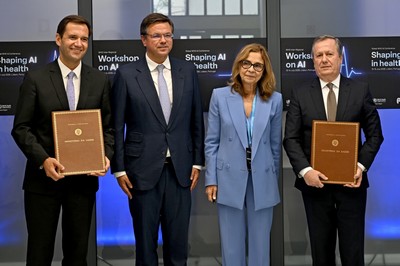
The agreement, signed between Portugal’s national medicines and healthcare regulator, Infarmed, and Geneva-based non-profit organisation HealthAI, is expected to enhance the country’s ability to monitor, evaluate and regulate AI-powered medical technologies. By joining the network, Portugal gains access to a global platform that enables regulators to exchange expertise, review AI health applications and respond more effectively to emerging safety concerns.
A key feature of the partnership is access to a comprehensive directory of regulator-reviewed AI healthcare tools, providing authorities with information on technologies that have undergone regulatory assessment. Portugal will also participate in a real-time international alert system designed to share reports of harmful incidents involving AI-based medical products, helping regulators identify potential risks more quickly and coordinate responses across borders.
The development reflects the growing recognition that artificial intelligence is rapidly transforming healthcare, with applications ranging from disease diagnosis and medical imaging to patient monitoring, drug discovery and hospital management. As health systems increasingly integrate AI into clinical practice, regulators face the challenge of ensuring that these technologies remain safe, transparent, effective and ethically deployed.
Portugal’s decision places it alongside a diverse group of countries already participating in the HealthAI Global Regulatory Network, including the United Kingdom, India, Brazil, Singapore, the Philippines, Indonesia, Vietnam, Zambia and Peru. The expanding network aims to foster international collaboration among health authorities as AI technologies continue to evolve at a rapid pace.
Infarmed President Santos Ivo emphasized that effective regulation of artificial intelligence cannot be achieved in isolation. He noted that international cooperation and the sharing of regulatory experience have become essential as governments work to address common challenges associated with AI-driven healthcare innovations.
The timing of Portugal’s accession is particularly significant as the European Union moves ahead with implementing the AI Act, regarded as the world’s first comprehensive legal framework governing artificial intelligence. The legislation introduces a risk-based approach, placing stricter requirements on AI systems considered high-risk, including many healthcare applications. Developers and users of such systems will be required to meet rigorous standards relating to safety, transparency, human oversight and accountability.
HealthAI was established to support governments and regulatory agencies in developing common standards and governance frameworks for AI in healthcare. The organisation receives financial support primarily from governments, including Canada, the United Kingdom, Norway and Singapore, and works with regulators worldwide to promote consistent oversight of emerging AI technologies.
HealthAI Chief Executive Baptista Leite has indicated that discussions are underway with several other European Union member states regarding possible participation in the network. He believes Europe’s regulatory approach will have implications far beyond the continent, influencing how AI governance evolves in other regions of the world.
Analysts say the EU’s regulatory decisions are likely to shape global standards because many international technology companies design products to comply with European requirements before expanding into other markets. As a result, Europe’s framework is expected to become an important reference point for countries seeking to establish their own AI governance systems.
Experts argue that cross-border cooperation will become increasingly vital as AI-powered medical technologies are developed, tested and marketed internationally. Shared regulatory knowledge, coordinated monitoring of adverse incidents and common technical standards can help ensure that innovation in healthcare is accompanied by robust safeguards for patient safety and public trust.
Portugal’s participation in the HealthAI Global Regulatory Network is therefore viewed as more than a national regulatory milestone. It signals a broader commitment to collaborative governance at a time when artificial intelligence is reshaping healthcare worldwide, reinforcing the importance of international partnerships in balancing technological innovation with patient protection and regulatory accountability.