




Kazakhstan’s Astana, Almaty turn rapid urban growth into new investment, tourism opportunities
Astana: Kazakhstan is increasingly leveraging the rapid expansion of Astana and Almaty to build new investment opportunities, strengthen urban infrastructure and position its two largest cities as competitive destinations for international tourism and business.
The strategy is particularly visible in Astana, where population growth and the development of new residential districts are generating demand for schools, healthcare facilities, sports infrastructure, logistics and other services, while Almaty is building on its combination of metropolitan attractions and mountain tourism to expand its international visitor base.
The opportunities were presented to international media in Astana, with officials from the two cities outlining investment pipelines, tourism infrastructure, international connectivity and projects aimed at supporting their next phase of urban development.
For Astana, the expansion of the city itself is becoming an important driver of investment.
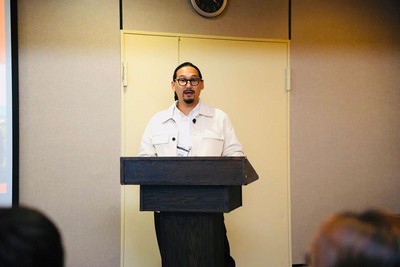
Yerlan Bakitovich Yerzhanov, Deputy Chairman of the Management Board of Astana Development Center LLP, said the capital’s rapid economic and population growth was creating substantial demand for modern social infrastructure.
“Astana is one of the fastest growing cities in the country today. Along with the growth of the city’s economy, its population is also growing rapidly,” Yerzhanov said.
He said the trend was opening opportunities for private investors in education, healthcare, sports and other areas of urban infrastructure.
According to the presentation, Astana Development Center currently supports an investment portfolio of 311 projects worth $3.28 billion.
The portfolio includes 38 completed facilities with investment of $358.2 million, while 61 projects worth $414.4 million are under construction and another 151 projects valued at $848.8 million are at the design stage.
The centre provides investors with support under a “one-stop shop” model, covering the process from developing an investment concept and selecting land to project implementation and commissioning.
“An investor receives full support at the main stages of the project, from developing the investment idea and selecting a land plot to project implementation and putting the facility into operation,” Yerzhanov said.
Social infrastructure emerges as a major investment field
Education has emerged as one of the largest components of Astana’s investment pipeline, reflecting the pressure created by the capital’s expanding population and residential development.
The centre is currently supporting 65 education projects worth about $557.9 million. Eleven projects valued at $98 million have already been completed, while 13 projects worth around $53.5 million are under construction.
Among the major projects is the international SABIS school, valued at approximately $43.1 million and backed by investment from the United Arab Emirates. The project is currently at the commissioning stage.
Healthcare accounts for 22 projects worth $178.5 million, while sports infrastructure represents 35 projects worth around $123.8 million.
Yerzhanov stressed that the development of social facilities needed to keep pace with residential construction.
“New residential areas should be developed together with a complete social environment — education, healthcare and sports,” he said.
The investment drive has already translated into new facilities and employment.
From 2023 through the first half of 2026, the centre and investors signed 205 investment contracts worth $1.53 billion.
During 2023–2026, 38 facilities worth $358.2 million were put into operation, creating 4,064 jobs.
A further 14 facilities worth $135.9 million are expected to be completed by the end of 2026, with the potential to create another 906 jobs.
Astana builds tourism economy around a modern capital
Alongside infrastructure development, Astana is seeking to convert its distinctive urban landscape, cultural institutions and growing international connectivity into a larger tourism economy.
Olzhas Pazylbekovich Ibrayev, Deputy Chairman of the Management Board of Astana Tourism Development Center LLP, described Astana as a young and rapidly evolving capital whose tourism proposition extends beyond traditional sightseeing.
“Astana is one of the youngest capitals in the world, a smart city that keeps changing every year,” Ibrayev said.
According to the presentation, more than 1.6 million tourists visited Astana in 2025, including over 380,000 international visitors.
The capital is connected with 48 destinations through 26 airlines from 26 countries, while citizens of 85 countries can travel to Kazakhstan without a visa.
Astana’s tourism infrastructure includes more than 2,250 restaurants and cafés, 15 museums, 12 theatres and nine art galleries.
New attractions are also being added to the city’s tourism offering, including the Kazakhstan Railway Museum and Alem AI, an artificial intelligence museum located at the former EXPO site.
Major events, hospitality facilities, wellness services and sports infrastructure are also being developed as part of efforts to broaden Astana’s appeal to international visitors.
Almaty combines metropolitan tourism with mountain access
While Astana is building a tourism identity around its modern capital-city image, Almaty is leveraging a different competitive advantage — the proximity of a major metropolitan centre to some of Kazakhstan’s most prominent natural attractions.
Asset Almukhanov of the Almaty Tourism Bureau said the city had established itself as one of Central Asia’s major tourism centres by combining urban experiences with immediate access to mountains and nature.
“Almaty is one of the key tourism centers in Central Asia,” Almukhanov said.
Around 2.5 million tourists visited Almaty in 2025, including more than 754,000 international visitors. The number of international tourists increased by almost 40 percent compared with 2023.
Tourism currently contributes 4.1 percent of Almaty’s gross regional product, according to the presentation.
The city is promoting a tourism model built around mountains, culture, gastronomy, business travel and major events.
“Mountains by day – city by night,” Almukhanov said, encapsulating the city’s tourism proposition.
Almaty has more than 400 accommodation facilities and over 12,500 hotel rooms, along with more than 7,250 cafés and restaurants, 22 museums, 161 historical and cultural monuments and more than 40 attractions.
Its location also makes it a gateway to major natural destinations in southern Kazakhstan, including Charyn Canyon, Kolsai Lakes, Kaindy Lake, Altyn-Emel National Park and the Singing Dune.
International connectivity is another major component of Almaty’s tourism strategy.
The city has 56 regular international routes and 14 charter routes, while Almaty Airport handled more than seven million passengers from January to July 2026, according to the presentation.
The Almaty Tourism Bureau is also conducting international marketing campaigns in 17 foreign markets, working with international media, influencers, television networks, travel platforms and content creators to increase the city’s visibility abroad.
Hotels and business tourism add to investment pipeline
The expansion of tourism is creating additional opportunities for private investment.
Almaty has plans and projects for 27 new hotels and more than 3,000 additional rooms, including properties associated with international hotel brands.
At the same time, Astana is seeking to diversify its investment base beyond social infrastructure.
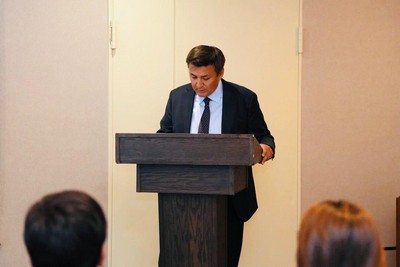
Auez Abayevich Tynybekov, First Deputy Chairman of the Management Board of Astana Invest City Investment Development Center LLP, highlighted the broader investment potential of the capital and the role of investment facilitation in attracting private and foreign capital.
Astana’s wider investment portfolio includes 46 industrial projects worth $308.9 million, 102 logistics projects worth $652.4 million and 40 tourism projects worth $116.6 million.
The figures indicate that the two cities are pursuing complementary development models: Astana is capitalising on rapid urban expansion and its role as Kazakhstan’s administrative and business centre, while Almaty is combining its metropolitan economy with established cultural and nature-based tourism.
For Astana Development Center, however, the central objective remains turning investment into visible improvements in the lives of residents.
“For us, investment in social infrastructure is not only about financial figures, but first of all about a real result for the city and its residents,” Yerzhanov said.
He said investment projects were contributing to the expansion of social infrastructure, job creation and improved access to education, healthcare and sports services for residents of the capital.
