
Celina Ali
Islamabad: Pakistan and the European Union this week agreed to further expand their strategic partnership across trade, investment, security, climate action, migration and regional diplomacy, with the EU praising Islamabad’s role in promoting peace and stability during recent regional crises, including efforts to defuse tensions between the United States and Iran.
The understanding emerged during the 8th Pakistan-European Union Strategic Dialogue held in Islamabad, where senior leaders from both sides reviewed the entire spectrum of bilateral relations and explored new avenues for cooperation in political, economic and security domains.
The high-level engagement reflected the growing importance both sides attach to their relationship at a time of increasing geopolitical uncertainty and global economic challenges. Officials described the dialogue as a significant step toward transforming Pakistan-EU relations into a broader and more comprehensive partnership based on shared interests and mutual benefit.
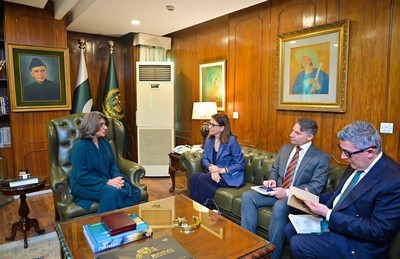
Prime Minister Shehbaz Sharif, during a meeting with EU High Representative for Foreign Affairs and Security Policy Kaja Kallas, reaffirmed Pakistan’s commitment to enhancing cooperation with the European Union in key sectors including trade, investment, climate resilience, sustainable development, connectivity, migration and security.
The prime minister highlighted the importance of the European Union’s GSP+ trade scheme in strengthening economic ties between Pakistan and Europe. He said the preferential trade arrangement has played a vital role in boosting Pakistani exports and fostering deeper economic integration between the two sides.
He stressed that Pakistan remains committed to broadening cooperation with the EU and exploring new opportunities for partnership in emerging sectors, particularly those linked to sustainable growth, technological advancement and climate adaptation.
Regional and international developments also featured prominently in the discussions. Prime Minister Shehbaz thanked the European Union for supporting Pakistan’s diplomatic efforts aimed at promoting peace and stability in the Gulf region and emphasized the importance of collective international action to prevent conflicts and encourage dialogue.
He noted that Deputy Prime Minister and Foreign Minister Ishaq Dar and Field Marshal Syed Asim Munir have played important roles in advancing Pakistan’s diplomatic outreach and peace initiatives during recent regional tensions.
The prime minister also shared Pakistan’s perspective on developments in South Asia and Afghanistan, highlighting Islamabad’s commitment to regional stability and constructive engagement with international partners.
In her remarks, Kaja Kallas described Pakistan as a major regional power and an important partner for the European Union. She reiterated the EU’s desire to deepen strategic engagement with Pakistan and expand cooperation across a broad range of sectors.
Significantly, the EU’s top diplomat expressed appreciation for Pakistan’s mediation efforts during the recent US-Iran crisis, noting that Islamabad’s diplomatic engagement contributed to preventing a wider conflict. She said the European Union supports efforts aimed at achieving a peaceful and sustainable resolution and remains ready to contribute to initiatives that reduce tensions and promote regional stability.
Her remarks were widely seen as an acknowledgment of Pakistan’s growing diplomatic role in regional conflict management and crisis prevention.
Addressing a joint press stakeout following the dialogue, Deputy Prime Minister Ishaq Dar described the Strategic Dialogue as the highest institutionalized mechanism between Pakistan and the European Union. He noted that the latest meeting followed the previous round in Brussels after the shortest interval in the history of such engagements, reflecting the growing momentum in bilateral relations.
Dar said both sides reviewed progress under the Pakistan-EU Strategic Engagement Plan 2019, covering areas such as trade and investment, development cooperation, migration and mobility, human rights, rule of law, security and counterterrorism.
He emphasized that the European Union remains one of Pakistan’s most important trading partners and described cooperation under the GSP+ framework as a mutually beneficial arrangement that has delivered significant economic gains for both sides. Discussions, he said, focused on further strengthening trade and investment ties and identifying new opportunities for economic collaboration.
The two sides also exchanged views on a range of global and regional issues, including the security situation in South Asia, developments in Afghanistan, the Middle East, Europe and the evolving geopolitical landscape.
During the discussions, Dar raised Pakistan’s concerns regarding what he described as unprovoked Indian aggression and reiterated Islamabad’s longstanding position that the Jammu and Kashmir dispute should be resolved in accordance with the wishes of the Kashmiri people and relevant United Nations resolutions.
He also highlighted Pakistan’s position regarding the Indus Waters Treaty, stating that recent developments had reinforced Islamabad’s legal stance concerning water rights under the agreement.
On Afghanistan, Dar expressed concern over the continued presence of militant groups operating from Afghan territory and stressed the need for effective regional cooperation to address cross-border security threats.
Kallas, while discussing Afghanistan, acknowledged Pakistan’s security concerns and stated that every country has the right to defend its citizens in accordance with international law.
Both sides ultimately agreed to strengthen cooperation in areas including climate resilience, clean energy, digital connectivity, migration management, education and people-to-people exchanges. Particular emphasis was placed on expanding educational opportunities through programmes such as Erasmus scholarships and fostering closer interaction between the citizens of Pakistan and Europe.
The dialogue concluded with a shared commitment to elevate Pakistan-EU relations to a new level, reflecting growing convergence on economic cooperation, regional stability and multilateral engagement. Observers viewed the discussions as evidence of deepening trust between Islamabad and Brussels and a recognition of Pakistan’s increasing diplomatic relevance in addressing regional and international challenges.