
Gwadar Pro
Islamabad: Pakistan and China this week further expanded cooperation in vocational education, technical training and youth development as a high-level delegation led by Chairman of the Prime Minister’s Youth Programme (PMYP), Rana Mashhood Ahmad Khan, paid an official visit to China.
During the visit, the delegation held talks with representatives from Guangdong Open University (Guangdong Polytechnic Institute), where senior university leadership, including President Liu Wenqing and Vice President Song Bo, held detailed discussions on ongoing Pakistan-China education cooperation projects. The talks reviewed progress made under commitments announced during Prime Minister Shehbaz Sharif’s visit to China and focused on accelerating the implementation of skills development initiatives.
A key development during the visit was the announcement of the establishment of the China Secretariat of the PMYP at the Beijing headquarters of Tangfeng International Education Group, aimed at strengthening coordination between institutions in both countries. The chairman reaffirmed Pakistan’s commitment to expanding structured pathways for youth employment through enhanced educational collaboration.
A major milestone of the trip was the joint unveiling of the Pakistan National Vocational Education Teachers Training Base plaque, marking a formal step toward institutionalizing teacher training cooperation. The initiative is designed to improve technical education standards, strengthen faculty development and expand employability opportunities for Pakistani youth.
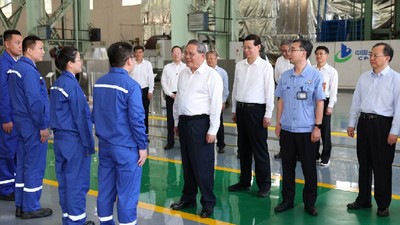
In a separate engagement, the delegation visited Beijing Guangda Boye Technology Development Co., Ltd., where discussions focused on emerging technologies, particularly new energy vehicle (NEV) training systems. Company officials briefed the delegation on advanced manufacturing processes and applied training models.
Both sides explored cooperation in industry-academia integration, curriculum development and workforce training aligned with Pakistan’s emerging industrial needs. Emphasis was placed on electric vehicle maintenance, battery systems, intelligent manufacturing and short-term technical certification programmes.