
Abida Shaheen
Islamabad: Prime Minister Shehbaz Sharif this week reaffirmed Pakistan’s commitment to further deepening its strategic partnership with Kazakhstan, with Islamabad placing particular emphasis on regional connectivity, expanded trade, energy cooperation, education and stronger people-to-people contacts.
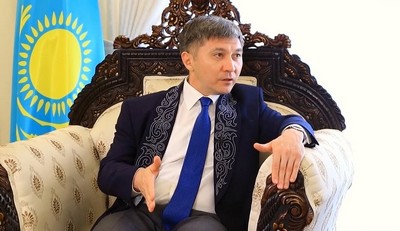
The prime minister expressed these views during a farewell meeting with Ambassador of Kazakhstan to Pakistan Yerzhan Kistafin, who called on him at the Prime Minister’s House upon completion of his diplomatic tenure in Pakistan.
The meeting provided an opportunity to review the progress made in Pakistan-Kazakhstan relations during Kistafin’s tenure and to underscore Islamabad’s desire to maintain the positive momentum in bilateral ties.
Deputy Prime Minister and Foreign Minister Senator Mohammad Ishaq Dar, Special Assistant to the Prime Minister Tariq Fatemi and Foreign Secretary Ambassador Amna Baloch were also present during the meeting.
Prime Minister Shehbaz Sharif appreciated Ambassador Kistafin’s contribution to strengthening the historic friendship and cooperation between Pakistan and Kazakhstan, acknowledging his efforts to expand bilateral engagement across a range of areas.
The prime minister particularly praised the Kazakh envoy’s role in facilitating the visit of President Kassym-Jomart Tokayev to Pakistan in February, describing the visit as an important milestone in the relationship between the two countries.
President Tokayev’s visit resulted in Pakistan and Kazakhstan elevating their bilateral relations to the level of a Strategic Partnership, giving fresh political impetus to cooperation between the two countries.
The development was seen as a significant step in Pakistan’s engagement with Central Asia, particularly as Islamabad seeks to strengthen economic and transport links with the region.
For Pakistan, Kazakhstan occupies an important position in Central Asia because of its geographical size, economic potential and strategic location.
As Central Asia’s largest economy and a major producer of energy and natural resources, Kazakhstan offers significant opportunities for Pakistan in trade, investment, energy and connectivity.
Islamabad has increasingly sought to strengthen relations with Central Asian states as part of its broader strategy of improving regional connectivity and expanding economic engagement beyond traditional markets.
Pakistan’s geographical location provides Kazakhstan with potential access to the Arabian Sea and international maritime trade routes, while stronger transport links could give Pakistani businesses greater access to Central Asian markets.
The two countries have therefore placed increasing emphasis on connectivity as a foundation for expanding bilateral economic relations.
During his meeting with the Kazakh ambassador, Prime Minister Shehbaz stressed the importance of enhanced regional connectivity.
Pakistan has been seeking stronger road, rail and trade links with Central Asia to establish itself as a bridge between the region and international markets.
For Kazakhstan, improved connectivity with Pakistan could provide additional trade routes towards the Arabian Sea, helping connect Central Asian markets with ports and maritime routes.
Such connectivity could also contribute to the development of broader regional trade corridors involving Pakistan, Kazakhstan and other Central Asian states.
The emphasis on connectivity reflects the growing recognition that stronger physical and commercial links are essential for unlocking the full potential of Pakistan-Central Asia trade.
The prime minister also called for expanded trade linkages with Kazakhstan, highlighting the need to translate the political warmth between the two countries into greater economic activity.
Pakistan and Kazakhstan have considerable potential to diversify bilateral trade, including through agricultural products, pharmaceuticals, textiles, information technology, machinery and other goods and services.
Kazakhstan’s substantial energy and mineral resources also create opportunities for cooperation in energy and related sectors.
For Pakistan, access to Central Asian markets is increasingly important as the country seeks to diversify its export destinations and expand its regional economic footprint.
For Kazakhstan, Pakistan offers access to a large consumer market and potentially greater connectivity with South Asia and global maritime trade routes.
Energy is another area with significant potential in the Pakistan-Kazakhstan relationship.
Kazakhstan is an important energy producer, while Pakistan continues to face substantial energy requirements as it seeks to support industrialisation and economic growth.
Greater cooperation could potentially include energy trade, investment, technical collaboration and exchanges in related technologies.
The prime minister’s emphasis on energy cooperation reflects Islamabad’s interest in building a broader economic relationship with Kazakhstan that goes beyond conventional trade.
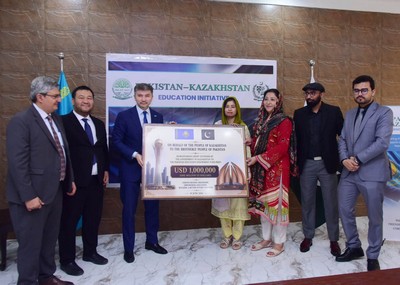
Prime Minister Shehbaz also identified education and people-to-people exchanges as important areas for strengthening bilateral relations.
Greater interaction between universities, students, researchers and professionals could help establish long-term institutional links between the two countries.
Educational exchanges can also complement economic and diplomatic cooperation by creating a deeper understanding between the people of Pakistan and Kazakhstan.
The emphasis on people-to-people contacts is particularly relevant as both countries seek to ensure that their strategic partnership develops beyond government-to-government relations.
The prime minister acknowledged Ambassador Yerzhan Kistafin’s efforts during his tenure, particularly his role in facilitating high-level engagement between Islamabad and Astana.
His contribution to President Tokayev’s visit was singled out for special appreciation, reflecting the importance attached by Pakistan to the Kazakh president’s February visit.
The visit elevated bilateral relations to the Strategic Partnership level and established a stronger political framework for future cooperation.
Prime Minister Shehbaz conveyed his warm regards to President Tokayev and expressed the hope that Pakistan-Kazakhstan relations would continue to expand under the new strategic framework.
Ambassador Kistafin thanked the prime minister for the cooperation and assistance extended to him during his assignment in Pakistan.
He expressed confidence that the positive trajectory of bilateral relations would continue under the Strategic Partnership framework, suggesting that the groundwork established during his tenure would provide a basis for further engagement.
The farewell meeting came as Pakistan and Kazakhstan seek to translate their newly elevated Strategic Partnership into practical cooperation.
For Islamabad, stronger relations with Kazakhstan fit into a wider strategy of engaging more closely with Central Asia through trade, connectivity, energy and investment.
For Astana, closer ties with Pakistan can provide opportunities to expand economic links with South Asia and gain access to additional trade and transport routes.
The success of the partnership will ultimately depend on how effectively the two sides convert political commitments into concrete projects, increased trade, improved connectivity and stronger institutional links.
Prime Minister Shehbaz’s emphasis on connectivity, trade, energy, education and people-to-people exchanges indicates that Pakistan wants the relationship with Kazakhstan to develop across multiple dimensions.
As the two countries move forward under the Strategic Partnership framework, the foundations laid during President Tokayev’s visit and Ambassador Kistafin’s tenure could provide important momentum for a new phase of Pakistan-Kazakhstan relations.
Prime Minister Shehbaz wished Ambassador Kistafin success in his future assignment, while reaffirming Islamabad’s commitment to maintaining the upward trajectory of relations with Kazakhstan and building a more substantive partnership with the strategically important Central Asian state.