
Celina Ali
Islamabad: Efforts by Pakistan and Iran to deepen economic integration through enhanced cooperation between the ports of Gwadar and Chabahar, new border infrastructure and expanded regional connectivity are expected to reinforce broader trade networks across the region, complementing ongoing infrastructure development under China’s Belt and Road Initiative (BRI).
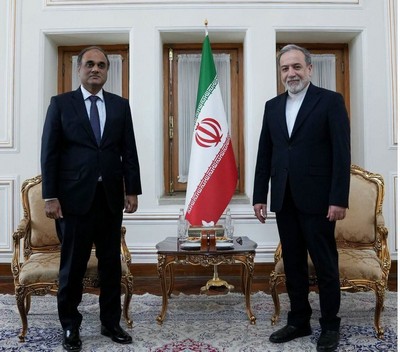
The renewed momentum emerged during a meeting in Tehran between Mohammad Saeid Arbabi, Chief Executive Officer of the Chabahar Free Zone Organization, and Pakistan’s newly appointed Ambassador to Iran Imran Ahmed Siddiqui, where both sides explored mechanisms for expanding bilateral trade, investment, logistics and transit cooperation, said an official statement.
Discussions centred on strengthening economic collaboration through the strategic capacities of the Chabahar-Gwadar corridor and accelerating the establishment of the proposed Rimdan-Gabd Joint Free Zone, which is expected to facilitate cross-border investment and commercial activity.
Both sides stressed that Pakistan and Iran should fully utilise the potential of their ports, free zones and border crossings to expand bilateral trade and strengthen regional economic integration among member states of the Economic Cooperation Organization (ECO).
Arbabi described Chabahar as Iran’s only oceanic free zone with a strategic location on international transport corridors, adding that closer cooperation with Pakistan’s Gwadar Port could significantly enhance logistics efficiency, attract joint investment and strengthen regional supply chains.
He said Chabahar and Gwadar should be viewed as complementary ports capable of creating mutually beneficial opportunities in transport, transit and international trade through coordinated development rather than competition.
The Iranian official also proposed accelerating the establishment of an independent joint border crossing connecting Rimdan and Gabd to facilitate the movement of import, export and transit cargo.
According to Arbabi, the new crossing would reduce transportation time, increase cargo handling capacity and help both countries pursue their shared objective of expanding bilateral trade to US$10 billion.
He further emphasised the importance of creating the Rimdan-Gabd Joint Free Zone, saying the initiative could attract investment, stimulate industrial production, create employment opportunities and promote balanced development in border regions.
Ambassador Siddiqui welcomed proposals to strengthen economic cooperation and reaffirmed Pakistan’s commitment to expanding trade through the strategic capacities of Gwadar, Chabahar and the Rimdan-Gabd border region.
He noted that enhanced border cooperation and improved connectivity would contribute to greater prosperity for communities living on both sides of the border while reinforcing the longstanding friendly relations between Pakistan and Iran.
The discussions also highlighted the importance of free zones and modern transport infrastructure in advancing regional economic diplomacy and improving trade connectivity across South and Central Asia.
Separately, Sistan-Baluchestan Governor Mansour Bijar disclosed that recent discussions with Pakistani authorities produced positive outcomes, including support for introducing barter trade arrangements designed to facilitate commerce despite financial restrictions.
He said both sides also discussed removing obstacles to rail transport, upgrading road infrastructure, improving air connectivity, extending border crossing operations and facilitating cargo movement.
Among the key understandings reached were proposals to launch a maritime shipping link between Chabahar and Pakistani ports, resume suspended passenger flights, strengthen rail connectivity and establish joint mechanisms to ensure the timely implementation of bilateral agreements.
The Iranian governor said officials from both countries had agreed that expert-level negotiations would begin within days to accelerate implementation of border and economic cooperation initiatives.
The evolving Pakistan-Iran connectivity agenda comes at a time when regional infrastructure networks are increasingly interconnected through China’s Belt and Road Initiative and the China-Pakistan Economic Corridor (CPEC), positioning Gwadar as a major gateway linking Pakistan with neighbouring markets and wider Eurasian trade corridors.