
Celina Ali
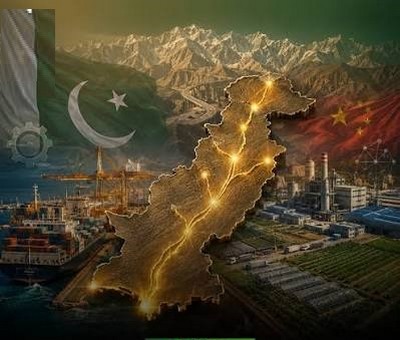
Islamabad: Efforts to eliminate chronic power shortages in Gilgit-Baltistan are expected to reinforce the region’s strategic role in the China-Pakistan Economic Corridor (CPEC) by improving energy security and supporting economic activity along one of the corridor’s most vital routes.
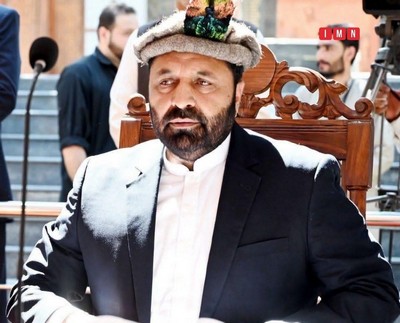
Chief Minister Gilgit-Baltistan Advocate Amjad Hussain thus week ordered authorities to accelerate the implementation of key power generation and transmission projects being executed under the Public Sector Development Programme (PSDP), stressing that their timely completion was essential to provide a lasting solution to electricity load shedding across the mountainous region.
Chairing a high-level review meeting, the Chief Minister assessed progress on the 26 MW Shagarthang Hydropower Project, the 20 MW Hanzal Hydropower Project, the 100 MW Solar Power Project, the 16 MW Naltar Hydropower Project and the Regional Grid Project.
He instructed project directors and relevant departments to prepare comprehensive implementation strategies with clearly defined timelines while assuring that the Gilgit-Baltistan government would recommend the timely release of funds by the federal government.
Gilgit-Baltistan serves as Pakistan’s gateway to China through the Khunjerab Pass and remains a strategically important region for CPEC, making reliable electricity infrastructure critical for supporting local communities, tourism, trade and long-term economic development.
Expressing concern over delays affecting ongoing schemes, the Chief Minister ordered the immediate return of vehicles allocated to PSDP projects that had been seized by district administrations, saying such actions were hampering construction activities and slowing implementation.
He also addressed operational challenges arising from shortages of technical personnel, directing authorities to ensure the permanent deployment of trained sub-engineers at all power stations and to conduct full-load testing of every newly completed facility before commissioning.
To enhance the region’s long-term energy capacity, the Chief Minister said the government would encourage investment in future large-scale power projects through Public-Private Partnership (PPP) arrangements while introducing reforms to improve electricity tariffs and the billing system.
Regarding the 26 MW Shagarthang Hydropower Project, he instructed the project director to prepare a detailed work plan that takes into account the limited construction season in the region. He also directed the Commissioner Baltistan and the relevant Deputy Commissioner to closely coordinate with project management and ensure tunnel construction continues during the winter months to avoid unnecessary delays.
Taking serious notice of the stalled 20 MW Hanzal Hydropower Project, the Chief Minister described it as a project of critical importance for Gilgit and said no further delays would be tolerated. He announced that a strategy would be finalized in consultation with all stakeholders to resume work without further interruption.
Reviewing the 100 MW Solar Power Project, he noted that the initiative had been announced by the Prime Minister of Pakistan to address electricity shortages in Gilgit-Baltistan and said the Prime Minister was personally monitoring its implementation. He directed project authorities to adhere strictly to the approved timelines.
The Chief Minister also ordered the Deputy Commissioner Gilgit to clear all outstanding land compensation payments for the 16 MW Naltar Hydropower Project within one week and submit a compliance report, while setting August 31 as the deadline for the project’s completion.
Expressing satisfaction over the progress of Phase-I of the Regional Grid Project, he instructed authorities to maintain high construction standards for transmission towers and directed deputy commissioners to facilitate timely land acquisition to keep the project on schedule.
The accelerated development of power infrastructure is expected to improve electricity supply, support socio-economic development and strengthen the enabling environment for trade, tourism and investment in Gilgit-Baltistan, a region that holds strategic significance for Pakistan’s connectivity with China under the broader CPEC framework.