
Tokyo: Stricter immigration and visa regulations in Japan are leaving many foreign entrepreneurs and long-term residents facing uncertainty, as revised rules on business manager visas and rising public concern over immigration reshape the country’s approach to foreign settlement.
The changes come amid growing domestic debate over overtourism, housing costs, and foreign investment pressures, alongside political calls for tighter controls on immigration policy.
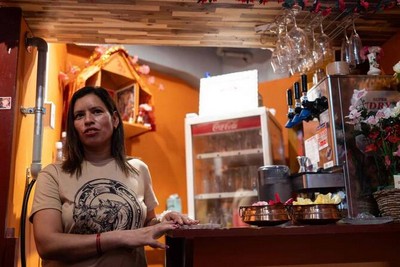
One of those affected is Nepalese national Budhathoki Samjhana, a restaurant owner in Tokyo’s Okubo district, who fears she may be forced to leave the country despite building her life and business there over the past decade.
Sitting inside her small Nepali restaurant, surrounded by the aroma of traditional dumplings, she reflected on the difficult reality of her situation.
“I always wanted to become a bridge between Japan and Nepal … but my dream is broken,” the 38-year-old said.
Budhathoki came to Japan in 2016 as a student and spent years saving to open her first restaurant in 2023. She later expanded to multiple outlets and was finally able to reunite with her daughter after a decade of separation, enrolling her in a Japanese school.
Now, however, she fears that new visa requirements could force her to shut down her business and leave the country.
“The biggest problem is the increase in capital requirement to 30 million yen ($185,000) from 5 million yen ($30,000),” she said, calling the threshold impossible for many small business owners to meet.
Under revised rules introduced by the ruling Liberal Democratic Party in late 2025, holders of business manager visas are required to meet stricter financial and operational conditions, with a transition period of three years to comply.
Authorities say the reforms aim to ensure that visas are granted to genuinely sustainable business operators, following concerns that the system had been misused by some applicants.
However, critics argue the changes are disproportionately affecting small entrepreneurs, particularly restaurant owners and family-run businesses concentrated in immigrant neighbourhoods such as Okubo, where South Asian, Southeast Asian, and East Asian communities have built vibrant local economies.
Indian restaurant owner Manish Kumar, who has lived in Japan for three decades, is among those reportedly affected. Despite long-term residence and established businesses, he has been informed his visa may not be renewed.
“My children only speak Japanese … and we’re told to go back to India,” he said, describing growing anxiety within the community.
A petition opposing the reforms has already gathered more than 67,800 signatures, reflecting rising concern among affected residents and supporters.
The policy shift follows broader government measures aimed at tightening immigration oversight, including a “zero illegal foreign residents” initiative and increased visa fees for certain categories of travellers.
At the same time, Japan continues to face a rapidly ageing population and chronic labour shortages, raising questions about the long-term balance between demographic needs and stricter immigration controls.
Officials have also pointed to a sharp rise in business manager visa holders in recent years, which increased by around 70 percent from 2020 to mid-2025, reaching approximately 46,000.
Government advisors argue that some applicants have used the scheme primarily as a migration pathway rather than for genuine business purposes, prompting calls for stronger scrutiny and documentation requirements.
Yet experts caution that while tighter rules may curb misuse, they also risk undermining small-scale entrepreneurs and young business owners who contribute to local economies and cultural diversity.
For Budhathoki, the uncertainty is deeply personal. Beyond her business, she worries about her daughter’s future in Japan and the possibility of having to uproot her life once again.
“My heart pounds when I think about the next visa renewal,” she said, voicing fears shared by many in the community as Japan’s immigration landscape continues to shift.