
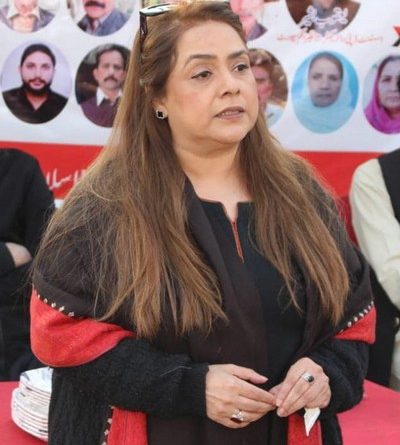
Malaika Raza warns of escalating ecological crisis in Islamabad amid mounting pressure on Margalla hills
Liaquat Ali
Islamabad: The Human Rights Cell of the Pakistan Peoples Party (PPP) this week sounded a strong warning over what it termed a rapidly intensifying “ecological crisis” in the federal capital, cautioning that unchecked urban expansion and large-scale deforestation are pushing the fragile ecosystem of the Margalla Hills towards irreversible damage.
In a detailed statement, the party’s Human Rights Cell General Secretary Malaika Raza expressed deep concern that Islamabad, once celebrated for its lush greenery and carefully planned landscape—is now facing mounting environmental stress amid accelerating development activities.
She noted that Pakistan is already among the countries most vulnerable to the impacts of Climate Change, and warned that environmental mismanagement in the capital could further aggravate climate-related risks.
Highlighting the scale of the issue, Malaika Raza stated that more than 29,000 trees have reportedly been cut down as part of ongoing government-backed development projects. She further criticized the continuation of new initiatives without what she described as “meaningful consultation” with local communities, raising concerns about transparency and inclusivity in urban planning.
The Margalla Hills National Park, of which the Margalla Hills form a vital component, was described as the ecological backbone of the capital rather than a commercial asset. She cautioned that increasing construction activity, including proposals for hospitality and recreational infrastructure, threatens to destabilize a delicate ecosystem that plays a crucial role in regulating the city’s climate and environmental balance.
Linking environmental degradation to human security, Malaika Raza warned that deforestation in the hills could significantly increase the risks of floods, heatwaves, and water shortages. She stressed that the environmental cost of such practices extends beyond the loss of green cover, potentially triggering cascading impacts on public health, livelihoods, and urban resilience.
Drawing parallels with global and domestic experiences, she referenced deforestation in the Amazon Rainforest as well as in regions such as Swat and Murree, noting that such environmental degradation has historically led to landslides, flooding, and loss of life. These examples, she said, underline the human consequences of unsustainable development policies.
The PPP leader also highlighted the increasing strain on Islamabad’s infrastructure, pointing out that the city—originally designed for a much smaller population, now accommodates millions, resulting in rising pollution levels, overstretched public services, and declining environmental quality.
In this context, the Margalla Hills were described as a “protective shield” for the capital, helping regulate temperature, preserve biodiversity, and recharge groundwater resources vital for urban sustainability.
Malaika Raza expressed particular concern over reported displacement in areas such as Saidpur, warning that both human communities and wildlife habitats are being adversely affected by expanding development footprints. She criticized proposed projects, including those linked to a “Margalla Park,” terming them environmentally damaging and socially disruptive.
Reaffirming the party’s position, she called for an immediate halt to projects that threaten ecological stability and community well-being. She urged authorities to adopt a more sustainable, transparent, and participatory approach to urban planning, emphasizing that short-term economic gains must not come at the cost of long-term environmental security.
Announcing a proactive response, Malaika Raza said the PPP Human Rights Cell would mobilize public support, engage civil society stakeholders, and pursue policy intervention through Parliament as well as the Ministry of Climate Change. She underscored the need for accountable governance and collective action to preserve Islamabad’s natural heritage.
“The survival of our environment, the health of our citizens, and the protection of wildlife depend on responsible decision-making today,” she said, calling for a unified national effort to safeguard the Margalla Hills for future generations.