
Celina Ali
Islamabad: Pakistan and China are moving to deepen their longstanding all-weather strategic partnership through expanded cultural exchanges, language learning and cooperation in the preservation of shared Silk Road heritage, with officials from both countries stressing that people-to-people ties remain a key pillar of bilateral relations.
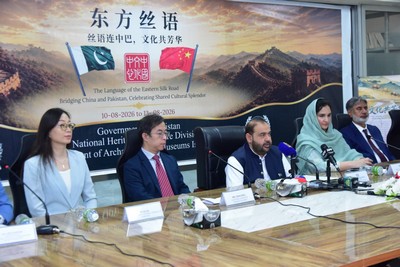
The emphasis on cultural diplomacy came as Federal Minister for National Heritage and Culture Aurangzeb Khan Khichi attended the opening ceremony of a Chinese Language and Chinese Culture Experience Course at the Department of Archaeology and Museums (DoAM) in Islamabad.
Held under the theme “The Language of the Eastern Silk Road – Bridging China and Pakistan, Celebrating Shared Cultural Splendor”, the four-day programme is designed to bring young Pakistanis and Chinese participants closer through language, cultural learning and hands-on exposure to traditional Chinese arts and customs.
Addressing the ceremony, Khichi described Pakistan-China relations as an all-weather strategic cooperative partnership, recalling the widely used description of the friendship as being “higher than the mountains, deeper than the oceans, and sweeter than honey.”
He said the bilateral relationship had expanded significantly over the decades, encompassing political cooperation, economic engagement, infrastructure development and major initiatives such as the China-Pakistan Economic Corridor (CPEC). However, he stressed that the most enduring foundation of the relationship was the interaction between the peoples of the two countries.
The minister said cultural exchange could give greater depth to the strategic partnership by allowing younger generations to understand not only each other’s languages but also their histories, traditions and ways of life.
“Language is a gateway to understanding the national character and culture of a country,” he said, describing the Chinese language and culture course as an important long-term platform for strengthening contacts between Pakistani and Chinese youth.
The programme introduces participants to basic Chinese greetings, self-introductions, numbers and everyday expressions, enabling them to communicate more effectively with Chinese counterparts. Organisers said the initiative was intended to go beyond conventional classroom-based language instruction by incorporating practical cultural experiences.
Participants will also be introduced to Chinese calligraphy, traditional festivals, cuisine and other aspects of Chinese cultural life.
Khichi said such immersive activities could help young Pakistanis develop a more meaningful appreciation of China’s history and cultural diversity while encouraging Chinese participants to learn more about Pakistan’s own heritage.
“Culture unites hearts,” he said, adding that cultural programmes could foster mutual respect, understanding and friendships that continued long after the completion of formal programmes.
The minister appreciated the Embassy of China in Pakistan, the Department of Archaeology and Museums and instructors involved in organising the course. He encouraged participating students and young people to take full advantage of the opportunity and contribute to strengthening the people-to-people dimension of Pakistan-China relations.
The ceremony also highlighted the growing role of heritage preservation in bilateral cultural cooperation.
Cultural Counsellor of the Embassy of China in Pakistan Chen Peng said the two countries possessed deep historical and cultural connections, with the ancient Silk Road having served as an important bridge between the civilisations of China and the region now comprising Pakistan.
He particularly drew attention to historical connections between Gandhara and Dunhuang, two important centres of cultural interaction along the ancient Silk Road.
Chen said Gandhara art represented a remarkable convergence of Eastern and Western civilisations, while the Mogao Grottoes of Dunhuang demonstrated how artistic traditions from different cultures travelled, interacted and evolved along the Silk Road.
The Chinese diplomat said the historical links provided a strong foundation for contemporary cooperation in archaeology, museum management and cultural heritage conservation.
He pointed to the 2023 exhibition of 173 Pakistani cultural relics at the Forbidden City in Beijing, describing it as the largest Gandhara art exhibition held to date.
The exhibition provided Chinese audiences with an opportunity to explore the historical and artistic legacy of Gandhara and demonstrated the potential of cultural heritage to deepen mutual understanding between Pakistan and China.
Chen also highlighted cooperation between DoAM and Peking University, including plans to establish a joint laboratory focusing on the preservation of the cultural heritage of Taxila.
He said China was prepared to share its experience and technologies in cultural heritage protection with Pakistani institutions while respecting Pakistan’s cultural traditions and learning from Pakistan’s own experience.
According to Chen, China had accumulated extensive expertise in conserving cave temples, earthen archaeological sites and stone cultural heritage. Chinese institutions were willing to work with Pakistani experts in areas such as three-dimensional scanning, digital modelling and the digital preservation of museum collections.
Such cooperation, he said, could help Pakistan apply modern technologies to document and safeguard its archaeological heritage for future generations.
Chen also referred to the “Gandhara Guardians” initiative, jointly launched by Chinese and Pakistani scholars, as an example of cooperation that combines education, academic engagement and community participation to promote the protection of historical sites.
He expressed hope that archaeological and cultural heritage institutions in the two countries would further expand cooperation in joint excavations, conservation and restoration, heritage digitisation, academic exchanges and the nomination and management of World Heritage sites.
Director General DoAM Syeda Tanzeela Sabahat said the department was committed to expanding cultural exchanges with China and regarded the language and culture programme as an opportunity to connect Pakistani and Chinese participants through shared learning.
She said initiatives of this nature could contribute to greater mutual understanding and stronger people-to-people relations, particularly among younger generations.
The course is being organised by the China Cultural Center in Pakistan and DoAM, with the Pakistan-China Cultural and Economic Promotion Association serving as co-organiser.
Being held from August 10 to 13, the programme has brought together around 50 Chinese and Pakistani guests, students and officials and comprises six sessions covering Chinese language, calligraphy, traditional festivals, cuisine and other cultural dimensions.
The initiative reflects a broader effort to complement Pakistan-China economic and strategic cooperation with stronger educational and cultural links.
The organisers said the ultimate objective was to establish a sustained platform for interaction between Chinese and Pakistani youth rather than limiting cultural exchange to individual events.
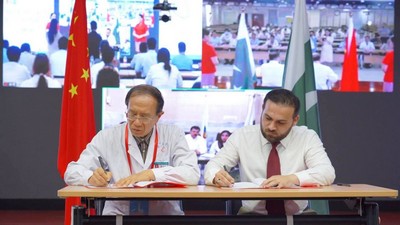
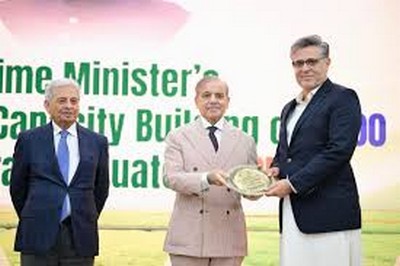
The opening ceremony concluded with the formal launch of the course and an exchange of commemorative plaques between the Chinese and Pakistani sides, marking another step towards expanding the cultural and heritage dimension of the Pakistan-China partnership.