

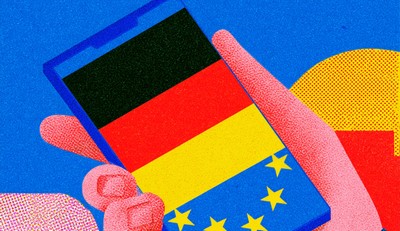
Berlin: Germany is pressing ahead with the implementation of the European Union Digital Identity Wallet (EUDI Wallet), maintaining its commitment to launch the system in January 2027 despite growing concerns that many EU member states remain unprepared for a coordinated rollout and that the project could deepen, rather than reduce, digital fragmentation across Europe.
The German government has continued to expand testing of the digital identity ecosystem through hackathons, pilot projects, developer sandboxes and industry partnerships while investing €79.3 million (US$91 million) in the initiative through 2026. Officials insist the project remains on schedule, dismissing criticism over its phased development as a reflection of agile implementation rather than disorder.
However, experts have questioned whether the first version of Germany’s wallet will deliver the full functionality originally envisioned under the EU framework. The initial release will enable digital identification and credential presentation but will not yet include qualified electronic signatures, pseudonymous authentication or payment authorization features, all of which are expected to be introduced at a later stage.
Technical specialists have described Germany’s approach as a “minimum viable” implementation designed primarily to satisfy the baseline requirements of the European Union while postponing more advanced capabilities. Critics argue that launching a limited version risks undermining public confidence in the broader digital identity initiative.
Concerns have also emerged over security, governance and privacy protections embedded within the proposed architecture. During discussions in the German Bundestag, technology experts highlighted issues ranging from transparency and post-quantum cybersecurity preparedness to the reliance on signed data credentials and cloud-based trust mechanisms.
An independent study commissioned by Germany’s national consumer federation warned that the current credential model could potentially enable different service providers to combine user information over time, raising concerns about cross-platform tracking and long-term privacy protection.
Additional criticism has focused on provisions within Germany’s proposed Digital Identities Act, which would allow the Federal Ministry for Digital Affairs to authorize new identity verification methods through ministerial regulation without requiring parliamentary approval. Experts cautioned that such provisions could potentially permit the return of video-based identity verification systems previously phased out over security concerns while weakening parliamentary oversight.
Privacy advocates have also questioned the handling of biometric information within the wallet framework. While the European Commission ultimately decided against mandatory biometric storage for all users, member states are required to include a biometric photograph while allowing citizens to opt out of storing it. However, not all EU countries are expected to adopt identical approaches, potentially creating inconsistencies in privacy protections across the bloc.
The broader challenge extends beyond Germany. Industry assessments indicate that fewer than half of the European Union’s 27 member states are expected to have fully operational digital identity wallets ready by the end of 2026. Separate evaluations have suggested that only a handful of countries are likely to meet the implementation deadline with complete certification and operational capability.
Germany’s own testing environment has also identified delays in onboarding public and private service providers capable of accepting the new digital identities, highlighting another obstacle to achieving seamless interoperability across Europe.
Public awareness remains another major hurdle. Consumer surveys conducted in France and Germany found that more than half of respondents had never heard of the EUDI Wallet, underscoring concerns that even a successful technical launch could struggle without stronger public engagement and communication.
European officials increasingly acknowledge that the January 2027 deadline is likely to mark the beginning of a gradual, phased implementation rather than a fully harmonized digital identity system across the bloc. Germany has similarly stated that its national wallet will continue to evolve through iterative updates, with additional verification methods and digital services being introduced over several years.
While policymakers continue to promote the EUDI Wallet as a cornerstone of Europe’s future digital economy, experts warn that uneven implementation, differing national approaches and limited public awareness could leave Europe operating with another fragmented digital ecosystem before full interoperability is eventually achieved.